First Friday Gallery Events: Community Art Walks in Portland
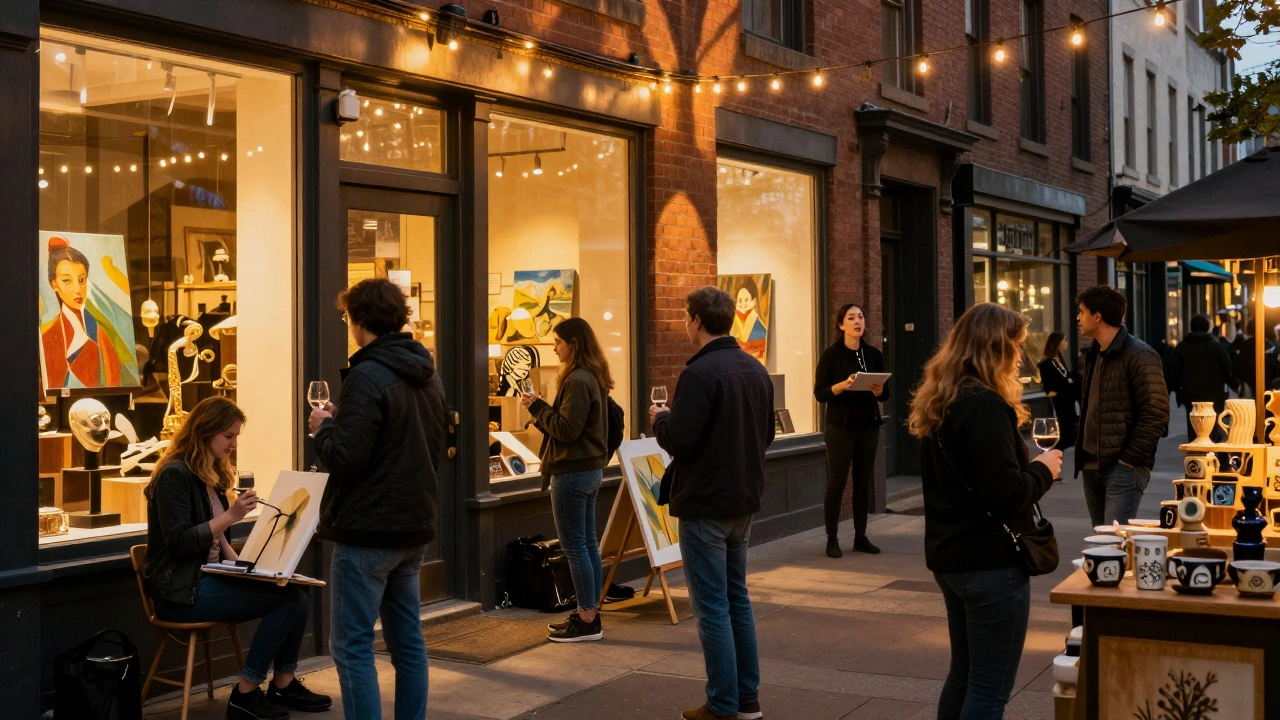
Every first Friday of the month, Portland comes alive in a way that has nothing to do with traffic or coffee shops. Streets that are quiet during the week turn into open-air galleries. Windows glow with paintings, sculptures sit on sidewalks, and strangers become conversation partners over shared admiration. This isn’t a curated museum exhibit. It’s First Friday Gallery Events-a grassroots tradition where local artists, businesses, and neighbors turn the city into one giant, free art walk.
How First Friday Started in Portland
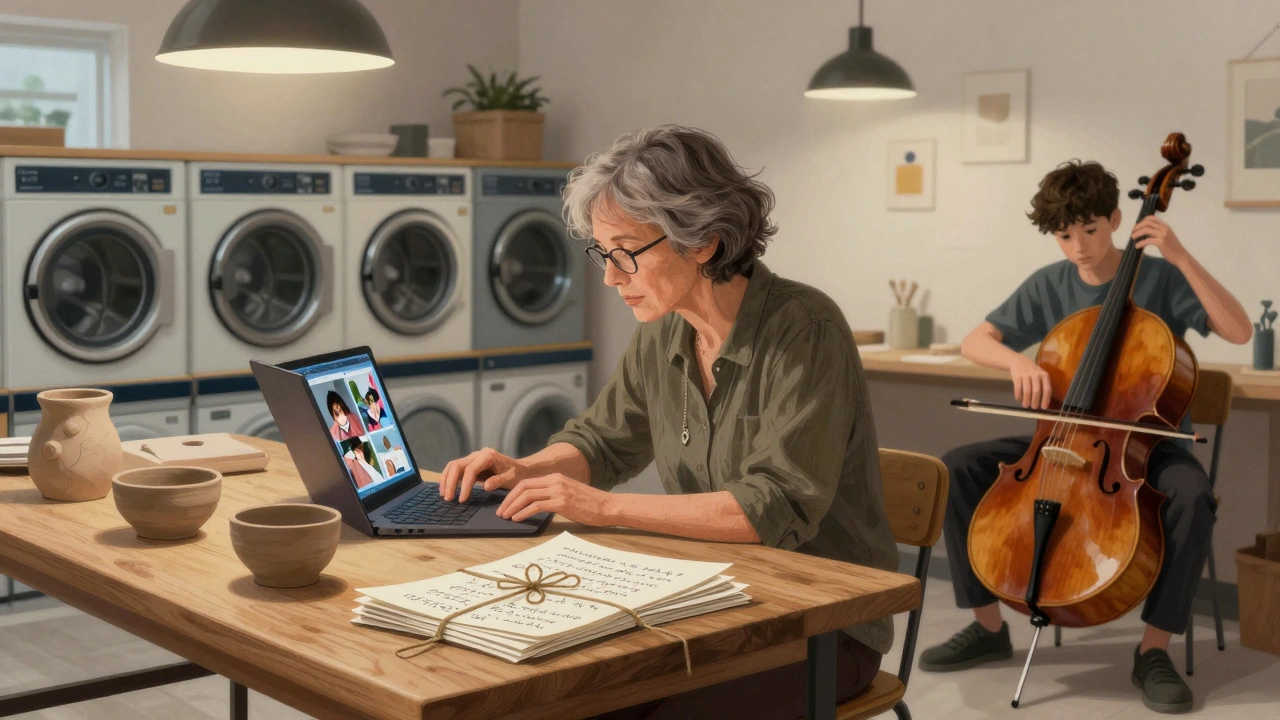
It began in the early 2000s, not with a grant or a city ordinance, but with a handful of artists in the Pearl District. They were tired of waiting for galleries to notice their work. So they opened their own doors-studio spaces, empty storefronts, even a former laundromat-and invited people to come in after work. No tickets. No RSVPs. Just wine, cheese, and art. Within five years, it spread to Northwest Portland, Hawthorne, and eventually to the Alberta and Sellwood neighborhoods. Today, over 120 venues participate, and the event draws more than 20,000 people each month.The magic isn’t in the scale. It’s in the spontaneity. You might stumble into a basement where a poet reads while someone paints live on a canvas. Or find a bakery displaying ceramic mugs made by the owner’s sister, each one labeled with a short story about its inspiration. There’s no curator deciding what’s good. The community decides, one step at a time.
What You’ll Find on a First Friday Walk
Every venue is different. Some are traditional galleries with white walls and spotlights. Others are nothing like that. Here’s what you can actually expect:- Pop-up studios-artists working live, answering questions as they paint or sculpt. You might watch someone mix pigments from ground minerals they collected in the Columbia River Gorge.
- Small business collaborations-a bookstore hosting a zine fair, a bike shop showing hand-painted helmets, a coffee roaster pairing their beans with abstract prints inspired by roast profiles.
- Performance art-a dancer moving through a hallway of mirrors, a musician playing a cello made from reclaimed wood in a corner of a hardware store.
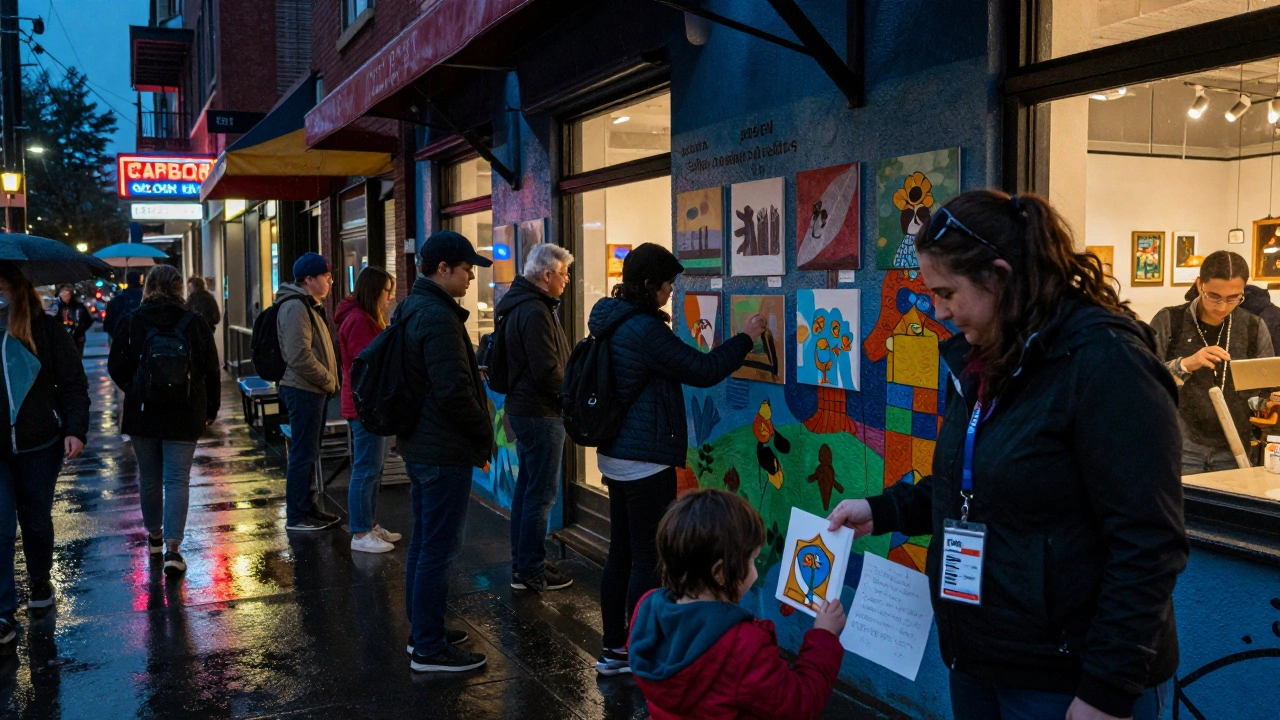
- Community murals-neighborhoods often unveil new murals on First Friday, painted over weeks by local teens, elders, and volunteers.
- Free artist talks-no formal lectures. Just 10-minute chats around a table with coffee, where someone explains why they used rust instead of paint, or how their grandmother’s quilts influenced their latest series.
There’s no map you need to follow. You can start at any corner. Some people begin at the Portland Art Museum’s free evening hours. Others just wander from one glowing window to the next, letting curiosity lead them.
Why It Matters Beyond the Art
First Friday isn’t just about looking at art. It’s about who gets to make it, and who gets to see it. Unlike commercial galleries that often require artists to pay for space or sell a certain number of pieces, First Friday is open to anyone with a studio, a wall, or even a cardboard box. A 16-year-old from East Portland showed her digital collages last month. A retired teacher from Beaverton displayed hand-thrown pottery made during her recovery from surgery. No one asked for proof of training or sales history.The event also keeps local spending alive. On First Friday, people don’t just buy art-they eat at neighborhood restaurants, buy drinks at local bars, and chat with shop owners they’ve never talked to before. A 2024 survey by the Portland Arts Commission found that 78% of attendees spent money at a nearby business during their walk, averaging $27 per person. That’s $540,000 in monthly economic activity just from one night.
How to Make the Most of Your First Friday
If you’ve never been, here’s how to show up without feeling lost:- Start early-Venues open at 5 p.m., but the real energy builds between 6:30 and 8:30. Arrive before 7 if you want to avoid crowds.
- Wear comfy shoes-You’ll walk 3 to 5 miles depending on how far you go. The walk from the Pearl District to Hawthorne is about 2.5 miles, and it’s all worth it.
- Bring cash-Some artists only take cash. Even if you don’t plan to buy, having a few bucks lets you tip a musician or buy a coffee from the artist running the espresso cart.
- Talk to people-Artists love to explain their work. Ask: “What inspired this?” or “How long did it take?” You’ll get stories you won’t find online.
- Check the unofficial map-The city doesn’t publish an official guide. But the Portland Art Walk Instagram account (@portlandfirstfriday) updates a crowd-sourced map every Thursday night. It’s the most reliable tool out there.
What’s New in 2026
This year, a few changes are making the event even more vibrant:- Free transit passes-TriMet is offering one-day passes for First Friday attendees. Just show your event wristband (free at any venue) and ride anywhere in the city.
- Art for All-A new initiative lets visitors take home one small piece of art for free. It’s not a giveaway-it’s a swap. You leave a note about why you chose it, and the artist keeps the note. Over 2,000 notes have been collected so far.
- Expanded neighborhoods-Gresham and Hillsboro joined the walk this year. You can now start in Portland and end in the suburbs without leaving the art trail.
What Makes This Different from Other Art Walks
Many cities have art walks. But Portland’s version doesn’t feel like an event. It feels like a living room. There’s no VIP section. No velvet ropes. No $500 paintings hidden behind glass. The art is out in the open, sometimes on a folding table next to a stack of used books.Compare it to a gallery opening in New York or LA. There, the art is a product. Here, it’s a conversation. One artist told me last month: “I don’t sell my work because I want people to own it. I sell it because I want them to live with it.” That’s the heart of First Friday.
Where to Go Next
If you love First Friday, you’ll also like:- Portland Art Museum’s Friday Nights-Free entry, live jazz, and themed exhibits. Runs every Friday, not just the first.
- Artists’ Open Studios-Held in May and September, this lets you visit actual homes and studios where artists live and work.
- The Portland Zine Symposium-A yearly gathering of self-published creators, often held right after First Friday in the same neighborhoods.
Do I need to pay to attend First Friday Gallery Events?
No, attendance is completely free. All venues welcome visitors without charge. Some artists may sell work, but there’s no entry fee, no ticket required, and no pressure to buy. The event is funded by local businesses, small grants, and volunteer efforts.
Are First Friday events only in Portland?
The original and largest First Friday art walk is in Portland, Oregon. But similar events exist in other cities-like San Francisco’s First Friday, or Seattle’s Gallery Walk. Each city runs its own version, but Portland’s is unique for its scale, community-driven structure, and lack of commercial gatekeeping.
Can I show my own art at First Friday?
Yes. Any artist can participate. You don’t need to be represented by a gallery. Just find a space-a storefront, a café, a garage, even a window-and reach out to the local neighborhood association. Many areas have a First Friday coordinator who helps new participants set up. You can also join the Portland Art Walk Facebook group for tips and connections.
Is First Friday family-friendly?
Absolutely. Kids are welcome everywhere. Many venues have interactive art stations, coloring tables, or storytelling corners. Some artists even create pieces specifically for children. The event is designed to be inclusive, with no age restrictions and plenty of space to move around. Strollers and backpacks are common.
What happens if it rains?
First Friday happens rain or shine. Most venues are indoors, and outdoor displays are protected under awnings or tents. Locals often say the best walks happen on rainy nights-the streets are quieter, the lights glow brighter, and the art feels more intimate. Bring a jacket and an umbrella. You’ll be fine.