Fire and Safety Compliance for New Art Galleries

Opening a new art gallery is exciting. You pick the space, hang the first piece, invite the community, and finally see your vision come to life. But before the lights go on and the first guests walk through the door, there’s something most new gallery owners overlook until it’s too late: fire and safety compliance. It’s not glamorous. It doesn’t show up in Instagram posts. But one misstep here can shut you down, cost you everything, or worse - put lives at risk.
Art galleries aren’t just rooms with paintings. They’re high-risk environments. Canvas, wood frames, paper, solvents, lighting systems, and dense collections of flammable materials all pile up in tight spaces. A single faulty wire or blocked exit can turn a cultural hub into a disaster zone. In 2023, the National Fire Protection Association reported over 1,200 fires in cultural institutions nationwide. Nearly 40% of those occurred in small galleries and private exhibition spaces - places with no dedicated safety staff, no fire marshal visits, and no clear checklist.
What the Fire Code Actually Requires for Art Galleries
Fire codes don’t treat galleries like offices or retail stores. They have special rules because of what’s inside. The International Building Code (IBC) and International Fire Code (IFC) classify galleries as Group B (business) or Group A-3 (assembly) depending on how many people you expect to gather at once. If you host events, openings, or tours with more than 50 people, you’re in Group A-3 - and that changes everything.
Here’s what you can’t skip:
- Exit routes: At least two clearly marked, unobstructed exits. No exceptions. Even if one exit leads to a storage closet, it must open directly to the outside or a protected stairwell. No dead-end hallways.
- Fire-rated walls and doors: Walls separating galleries from storage areas or mechanical rooms must be rated for at least one hour. Doors must be self-closing and labeled as fire-rated. Many gallery owners install beautiful custom doors - but if they’re not fire-rated, they’re illegal.
- Smoke detectors and alarms: Hardwired, interconnected smoke alarms are required in every room, including storage closets and restrooms. Battery-only units won’t pass inspection.
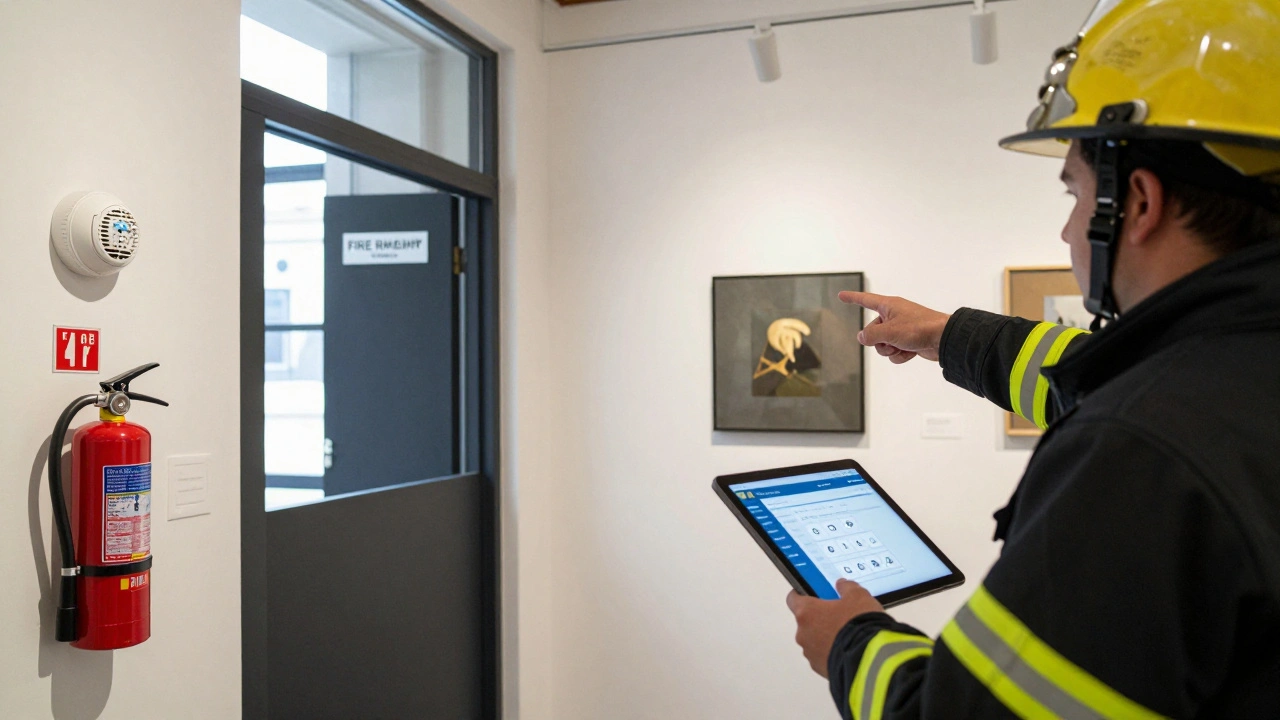
- Extinguishers: At least one ABC-rated fire extinguisher per 3,000 square feet. They must be mounted on walls, visible, and no more than 75 feet from any point in the gallery. Don’t hide them behind paintings.
- Lighting and electrical: All wiring must be done by a licensed electrician. Overhead lighting must be mounted with proper clearance from artwork. LED fixtures are strongly recommended - they run cooler than halogens or incandescents, which can reach temperatures over 300°F.
Some cities, like New York and San Francisco, have extra rules. Portland, for example, requires all galleries over 1,500 square feet to have a fire alarm system connected to the city’s emergency network. Check with your local fire department before signing a lease.
Storage Is the Hidden Danger
Most gallery fires start in back rooms, not the main space. That’s where you store extra canvases, crates, packing materials, cleaning supplies, and solvents. These areas are often forgotten in design plans.
Here’s what you need to know about storage:
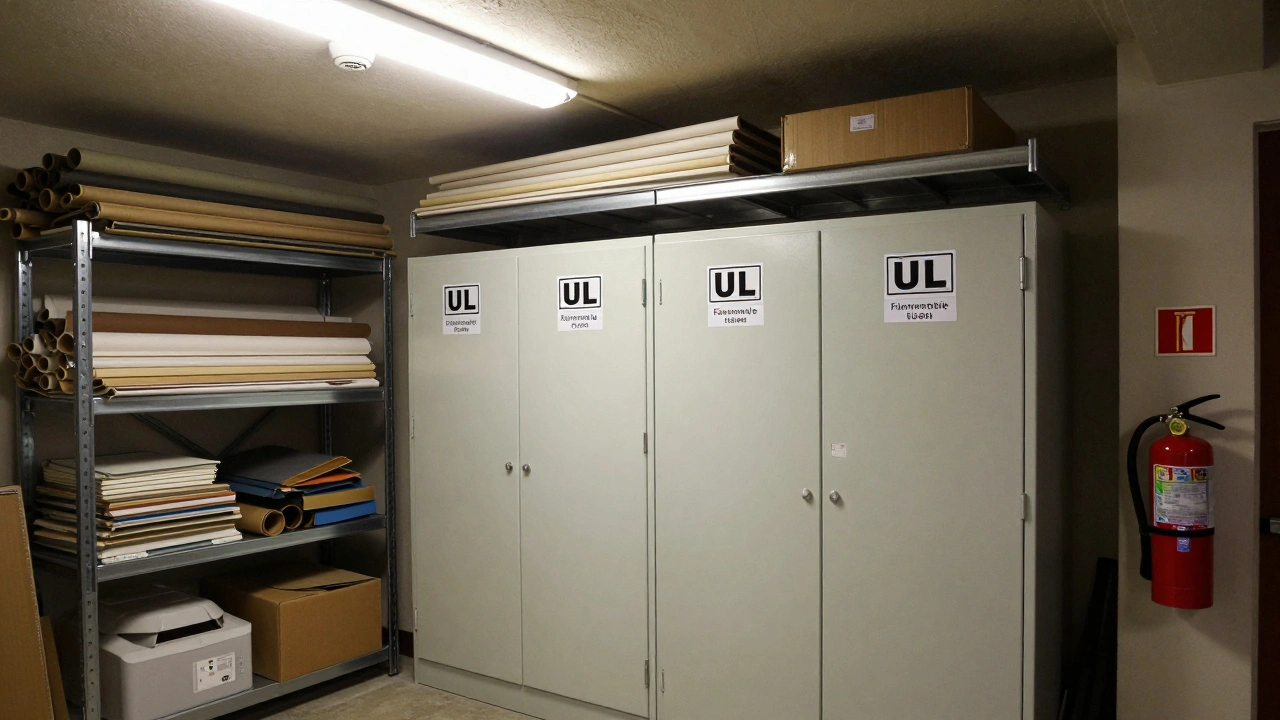
- Flammable liquids: Paint thinners, varnishes, and adhesives must be stored in UL-listed flammable storage cabinets - not under a desk or in a plastic bin. These cabinets are rated to contain fires and vent fumes safely.
- Art storage: Canvas and paper-based artwork should never be stored directly on the floor. Use metal shelving, elevated at least 6 inches. Moisture and pests are problems, but so is fire - and cardboard boxes burn fast.
- Clearance: Keep all storage at least 3 feet away from sprinkler heads, electrical panels, and HVAC vents. A 2022 fire in a Chicago gallery started when a box of archival paper touched a hot HVAC duct.
One gallery owner in Seattle lost $800,000 in artwork because their storage room had no fire-rated door. The fire spread in under 90 seconds. They didn’t have insurance - because their policy required compliance with fire codes. They never got a payout.
Artwork Itself Can Be a Hazard
You might think, “My art is priceless - it’s not flammable.” But that’s not true. Most paintings are made of oil, canvas, wood, and varnish - all combustible. Even sculptures made of resin, foam, or fabric can ignite easily.
Here’s how to reduce risk:
- Spacing: Hang artwork at least 18 inches away from walls. Heat builds up behind pieces, especially if they’re near lights or radiators.
- Lighting: Avoid halogen spotlights. Use LED track lighting with low heat output. Install timers or motion sensors so lights aren’t left on overnight.
- Protective glazing: For high-value or fragile pieces, use UV-filtering acrylic instead of glass. It’s lighter, safer, and less likely to shatter if something hits it.
- Climate control: Temperature swings and humidity can damage art, but they also create fire risks. High humidity can cause wiring to corrode. Low humidity increases static electricity - which can spark near solvents or dust.
Inspections and Paperwork You Can’t Ignore
Before you open, you’ll need permits. Not just a business license. You need:
- Fire permit: Issued by your local fire marshal. Requires a plan review of your layout, exits, and fire systems.
- Building occupancy permit: Confirms your space meets safety codes for the number of people you plan to host.
- Electrical inspection: Must be done after all wiring is installed - not before.
Inspections aren’t optional. In 2024, a gallery in Denver was shut down for six months after a surprise inspection found blocked exits and unapproved wiring. They had been open for eight months. No one told them they needed a permit.
Keep copies of all inspection reports and permits. You’ll need them for insurance, leases, and future inspections. Some cities now require digital uploads. Portland’s Fire Bureau has an online portal where you can submit plans and track progress.
What Happens If You Skip Compliance?
It’s not just about fines. You could lose:
- Your art: Most insurance policies require proof of code compliance. If you don’t have it, you get nothing after a fire.
- Your license: Cities can permanently revoke your business permit for repeated violations.
- Your reputation: One fire - even a small one - makes headlines. Local media will ask: “Why didn’t they follow basic safety rules?”
- Your life: In 2021, a gallery in Boston had a fatal fire. The owner didn’t have working smoke detectors. Two visitors died. The owner was charged with manslaughter.
There’s no such thing as “we’ll fix it later.” Fire codes are not suggestions. They’re written in blood.
How to Get Started - A Simple 5-Step Plan
You don’t need to be an expert. Just follow this:
- Call your local fire department. Ask for their gallery compliance checklist. Most have one. Portland’s is online - search “Portland Fire Bureau gallery requirements.”
- Map your exits. Walk every path someone would take to leave. Can they reach two exits without passing a painting? Is anything blocking the way?
- Review your electrical plan. Hire a licensed electrician - don’t rely on the landlord’s wiring. Ask them to confirm all fixtures meet NFPA 70 standards.
- Install fire-rated doors and cabinets. Don’t wait. Order them early. They take weeks to arrive.
- Document everything. Take photos of your extinguishers, exits, and storage areas. Save inspection receipts. Build a digital folder. You’ll thank yourself later.
Compliance isn’t about bureaucracy. It’s about respect. Respect for the art. Respect for your visitors. Respect for the people who work for you. And yes - respect for yourself.
Do I need a fire alarm system if my gallery is under 1,000 square feet?
It depends on your city and how you use the space. In Portland, any gallery that hosts public events - even occasional openings - must have a connected fire alarm system, regardless of size. If you only open by appointment and never have more than 10 people, you may be exempt. But always check with your local fire marshal. Never assume.
Can I use regular LED lights for my artwork?
Yes - but not all LED lights are equal. Avoid cheap, non-dimmable LEDs that flicker or overheat. Look for fixtures labeled “art gallery rated” or “low heat output.” They should have a color rendering index (CRI) of 90 or higher so colors look true. Also, make sure they’re mounted with proper spacing from walls and ceilings to prevent heat buildup.
What if my gallery is in an old building with no sprinklers?
Many historic buildings don’t have sprinklers, and retrofits can be expensive. But there are alternatives. Some cities allow “equivalency” approvals - meaning you can install extra smoke detectors, fire-rated doors, and automatic shut-off systems to meet safety goals without sprinklers. You’ll need to submit a detailed plan to your fire marshal. It’s not automatic, but it’s possible.
Do I need insurance before I open?
Yes, and not just any policy. You need fine arts insurance that specifically covers fire, theft, and environmental damage. But here’s the catch: most insurers require proof of fire code compliance before issuing a policy. You can’t get insurance without passing inspection - and you can’t pass inspection without having the right systems in place. Plan ahead. Start the insurance process early.
Can I install my own fire extinguishers?
You can buy and mount them yourself, but they must be inspected annually by a certified technician. Most fire departments require a sticker on each extinguisher showing the last inspection date. If you don’t have it, you’ll fail your next inspection. Keep a log. It’s not optional.