Distinguishing Restorations From Original Artist Rework
You walk into a gallery, or maybe you’re scrolling through an auction catalog online. You see a painting that looks old, maybe even ancient. The label says it’s by a master from the 17th century. But here is the problem: half of what you are looking at might not be what the artist painted in 1650. It could be a patch job from 1920. Or worse, it could be a "rework" where a later artist took liberties with the original vision. How do you tell the difference? This isn't just academic nitpicking; it determines whether you pay $500 or $50,000.
The line between restoration and artist rework is blurry to the untrained eye. Yet, for collectors, conservators, and insurers, this distinction is everything. Restoration aims to preserve and stabilize. Rework often implies intervention that changes the aesthetic or structural intent. Let’s break down how to spot these differences before you sign a check.
The Core Difference: Preservation vs. Interpretation
Think of conservation as healthcare for art. Its goal is to keep the patient alive without changing who they are. If a canvas has a tear, a conservator mends it using reversible materials. They clean off yellowed varnish to reveal the original colors. They do not repaint the sky because they think blue would look better today.
Artist rework is different. It’s when someone-sometimes another artist, sometimes a restorer acting like one-alters the image itself. Maybe the subject’s face was damaged, so a 19th-century restorer repainted the eyes to make them look more "alive." Now you have a hybrid object. The brushstrokes around the eyes belong to a Victorian hand, while the rest belongs to the Baroque master. This changes the artwork's identity. When you authenticate a piece, you aren't just asking "Is this real?" You're asking "How much of this is real?"
This matters because value hinges on authenticity. A fully original work commands a premium. A heavily restored piece sells for a fraction of the price. An "artist rework" sits in a tricky middle ground. Sometimes, famous artists reworked their own earlier pieces, creating a new layer of history. Other times, anonymous hands tried to "fix" damage and ended up erasing the original signature style.
Visual Clues: What Your Eyes Can Catch
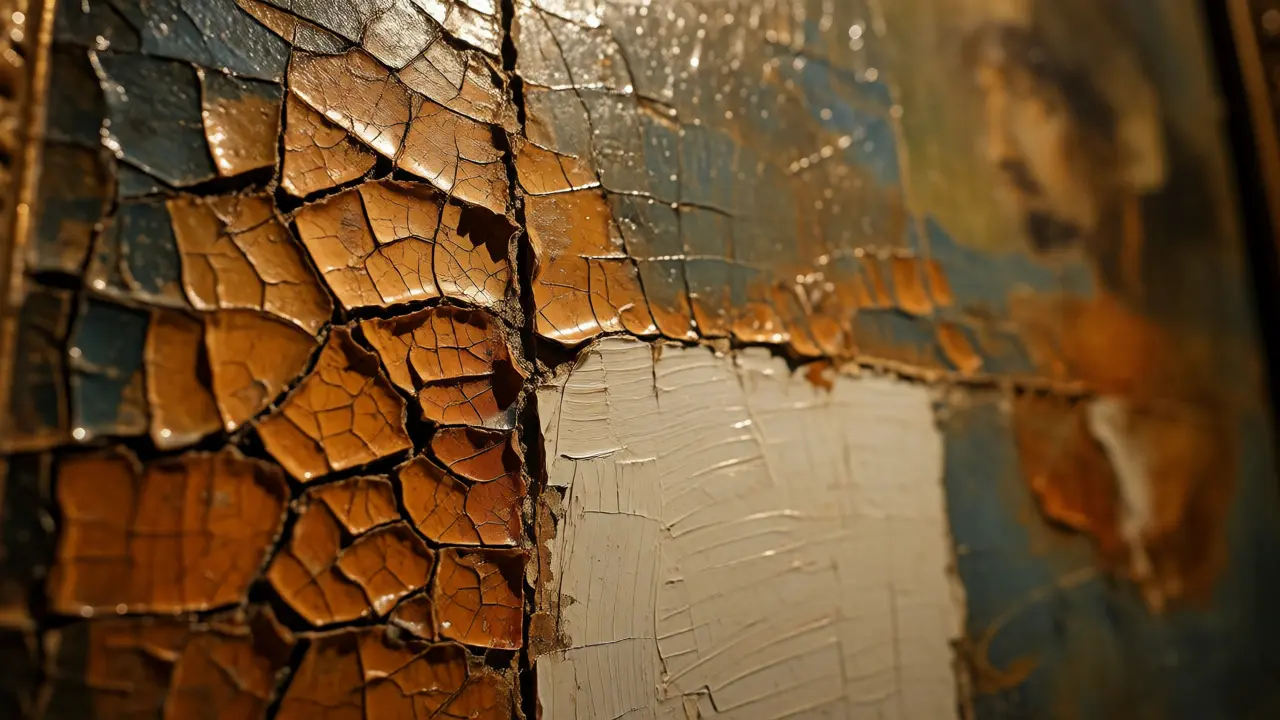
You don’t need a lab coat to start spotting inconsistencies. Start with the surface texture. Original oil paint develops a specific type of cracking called craquelure. These cracks form over centuries as the paint dries and contracts. They follow the grain of the wood or the weave of the canvas.
If you see patches where the cracks stop abruptly, or if the pattern looks too uniform, that’s a red flag. Restored areas often lack the deep, chaotic network of age-related cracks. Instead, they might show fine, shallow lines from newer paint layers drying quickly. Look for color mismatches under raking light (light coming from the side). Newer paint often reflects light differently than aged varnish. It might look flatter or glossier than the surrounding area.
- Check the edges: Restorers often paint over the tacking margins (the part of the canvas stapled to the frame) to hide stains. If the edge color doesn't match the center, ask questions.
- Look for "floating" elements: In a rework, a figure might look slightly out of focus compared to the background. This happens when a restorer paints over a blurred original to sharpen details.
- Inspect the signature: Is the signature sitting on top of the craquelure? If the cracks go through the signature, it’s likely original. If the signature covers the cracks, it was added later.
Technical Analysis: The Science Behind Authentication
When visual inspection hits its limit, experts turn to technology. X-ray fluorescence (XRF) mapping helps identify pigments. Certain colors didn’t exist in certain eras. If a "17th-century" painting contains titanium white-a pigment invented in the 20th century-you know there’s been significant modern intervention.
Infrared reflectography (IRR) reveals what lies beneath the visible paint. It can show underdrawings, changes in composition, and hidden signatures. Here’s where things get interesting. If the IRR shows a sketch that matches the final painting perfectly, it supports authenticity. But if the IRR reveals a completely different composition underneath, it suggests the current surface is a heavy rework or a cover-up of a failed attempt.
Raman spectroscopy goes deeper, analyzing molecular structures. It can distinguish between natural ultramarine (ground lapis lazuli) and synthetic ultramarine (created in the 1820s). This data provides hard evidence. You aren't guessing anymore; you’re reading the chemical fingerprint of the era.
| Feature | Original Work | Conservation/Restoration | Artist Rework |
|---|---|---|---|
| Craquelure Pattern | Irregular, follows material stress | May be stabilized but consistent | Abrupt breaks or missing in patched areas |
| Pigment Composition | Historically accurate materials | Reversible, compatible materials | Modern pigments or anachronistic mixes |
| Brushstroke Style | Consistent with artist’s known hand | Minimal interference, matching tone | Different technique or pressure |
| Varnish Layer | Aged, potentially discolored | New, clear, removable varnish | Mixed varnish ages, uneven gloss |
| Provenance Records | Continuous ownership history | Documented treatment reports | Gaps in history or vague descriptions |
The Role of Provenance and Documentation
Paper trails save lives-or at least, bank accounts. Provenance is the documented history of who owned the artwork. A strong provenance includes receipts, exhibition catalogs, and previous appraisal notes.
Read the treatment reports carefully. Did a reputable conservator document every step? Good reports include photos taken before, during, and after treatment. They specify exactly which areas were cleaned and which were retouched. If a report says "extensive inpainting," that means large areas were painted over. That’s a major factor in valuation.
Beware of vague terms like "cleaned and relined." Relining involves gluing a new backing canvas to the old one. While common in the past, aggressive relining can flatten the original paint texture. It destroys the impasto (raised paint strokes) that many masters used for effect. If the texture feels flat and lifeless, suspect heavy restoration.
Economic Impact: Why It Matters to Your Wallet
Let’s talk numbers. An original Rembrandt might sell for millions. A Rembrandt with 30% restoration might sell for 40% of that value. Why? Because buyers want the artist’s direct touch. Every square inch of rework dilutes the connection to the creator.
Insurance companies treat these categories differently. A fully original piece gets full coverage based on market value. A restored piece might require a special rider or lower payout limits. If you’re buying for investment, understand the depreciation risk. Heavy restoration is a sunk cost. It rarely adds value unless it stabilizes a crumbling masterpiece.
Consider the case of a mid-20th-century abstract expressionist work. If a restorer filled in scratches with acrylics, the piece might still be valuable. But if a later artist added geometric shapes to "modernize" it, the provenance becomes murky. Collectors prefer purity. Even well-intentioned fixes can complicate resale.
Common Pitfalls and Red Flags
Sellers sometimes use euphemisms. "Touched up" sounds minor. It might mean 20% of the surface was repainted. "Stabilized" sounds safe. It might involve invasive adhesives that trap moisture. Always ask for specifics.
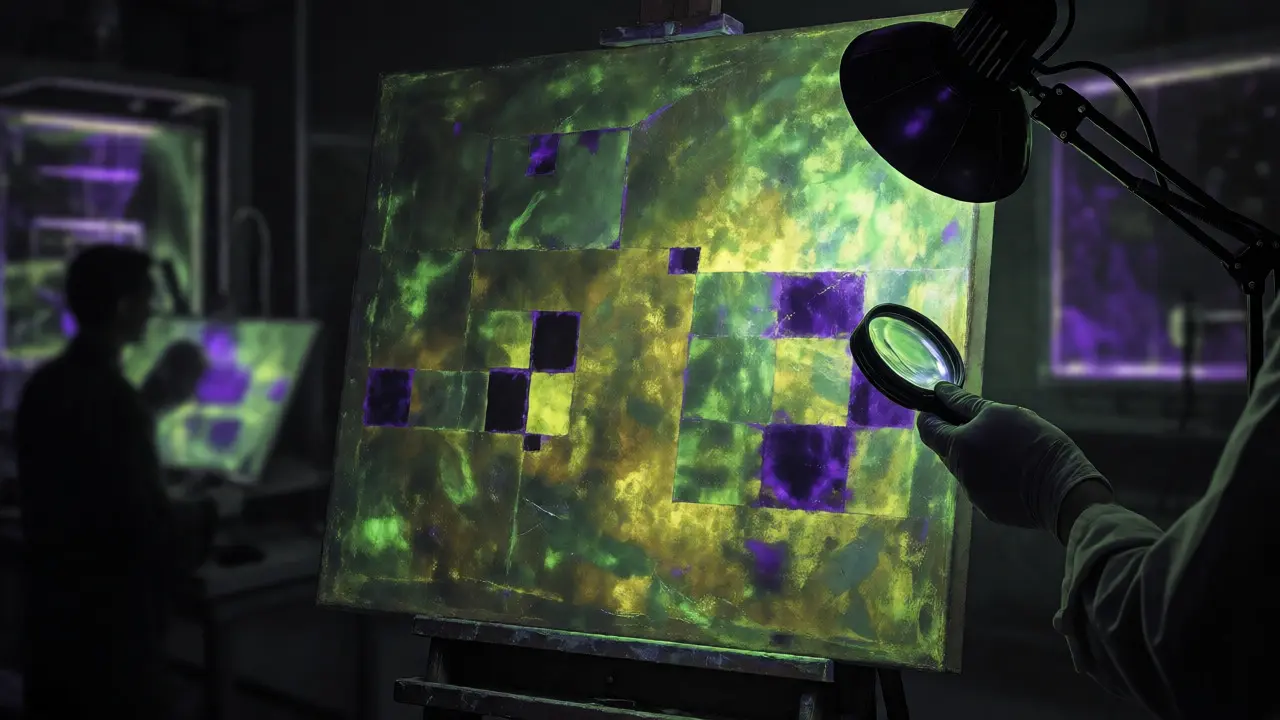
One major red flag is inconsistency in lighting conditions during inspection. Paint looks different under UV light than under daylight. Request a UV examination. Old varnish fluoresces greenish-yellow. Fresh retouching appears dark or purple under UV light. This contrast makes repairs obvious to trained eyes.
Another trap is the "museum quality" claim. Museums do restore art, but they document it rigorously. Private restorers might not. If a dealer claims museum quality, ask for the conservator’s name and credentials. Check if they are members of professional bodies like the American Institute for Conservation (AIC).
What is the main difference between restoration and rework?
Restoration focuses on preserving the existing material and stabilizing the artwork using reversible methods. Rework involves altering the visual appearance, often by adding new paint layers that change the original artistic intent or composition.
Does restoration decrease the value of an artwork?
Yes, generally. Extensive restoration reduces the amount of original material, which lowers desirability among serious collectors. However, necessary stabilization can prevent further loss, protecting long-term value.
How can I tell if a painting has been reworked?
Look for inconsistencies in craquelure patterns, color mismatches under raking light, and abrupt stops in crack networks. Technical analysis like X-ray fluorescence can detect anachronistic pigments.
Is UV light useful for detecting restoration?
Yes. Under ultraviolet light, old varnish typically fluoresces a yellow-green color, while recent retouching appears dark or purple, making repairs clearly visible.
Should I buy a painting with known restoration?
It depends on your budget and goals. For display purposes, a well-restored piece can be beautiful and affordable. For investment, prioritize works with minimal intervention and clear documentation.