Decolonial Aesthetics: Redefining Contemporary Art and Power
Key Takeaways
- Decolonial aesthetics challenge the 'universal' standards of beauty set by Western institutions.
- It focuses on recovering indigenous knowledge and ancestral practices.
- The goal is 'epistemic disobedience'-refusing to let one culture define truth for everyone else.
- It shifts the focus from the art object as a commodity to the art process as a tool for liberation.
The Trap of the Universal Museum
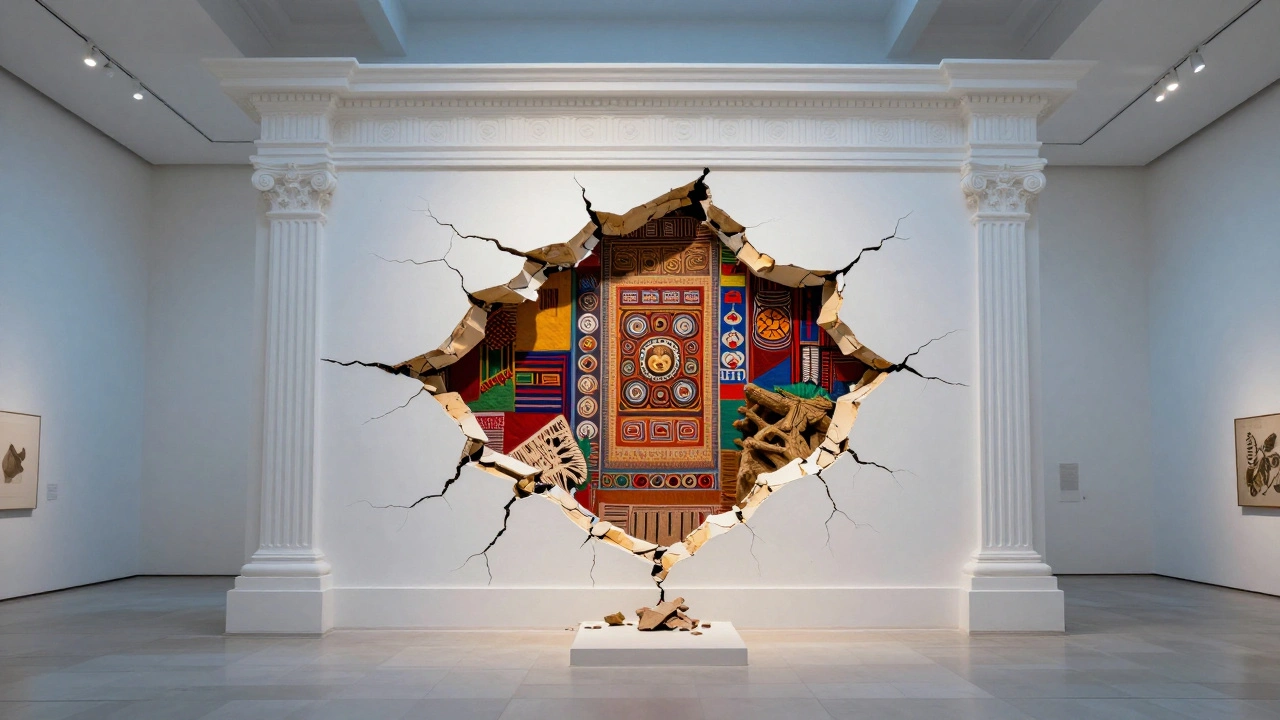
For centuries, the art world has operated under a 'universal' standard. If a piece of art used linear perspective or followed the rules of the Renaissance, it was called 'Fine Art.' If it was a woven textile from Peru or a mask from the Congo, it was labeled 'ethnographic' or 'primitive.' This distinction wasn't accidental. It was a way to categorize the world: the West produces high culture, and the rest of the world produces craft or curiosities.
When we talk about Contemporary Art today, we often see museums trying to 'diversify' their collections. They might buy a few works from artists in Africa or Asia. But if the curator still uses a Western framework to explain those works, nothing has actually changed. This is what critics call 'inclusion' versus 'decolonization.' Inclusion asks you to join the existing club; decolonization asks who owns the club and why they get to decide who enters.
Epistemic Disobedience and the Global South
To understand this movement, we have to look at Epistemic Disobedience. This is a fancy way of saying 'refusing to think the way your colonizer told you to think.' It is a concept heavily pushed by thinkers like Walter Mignolo. In the art world, this looks like artists rejecting the need for validation from New York or London galleries. Instead, they create work that speaks directly to their own community's history and spiritual needs.
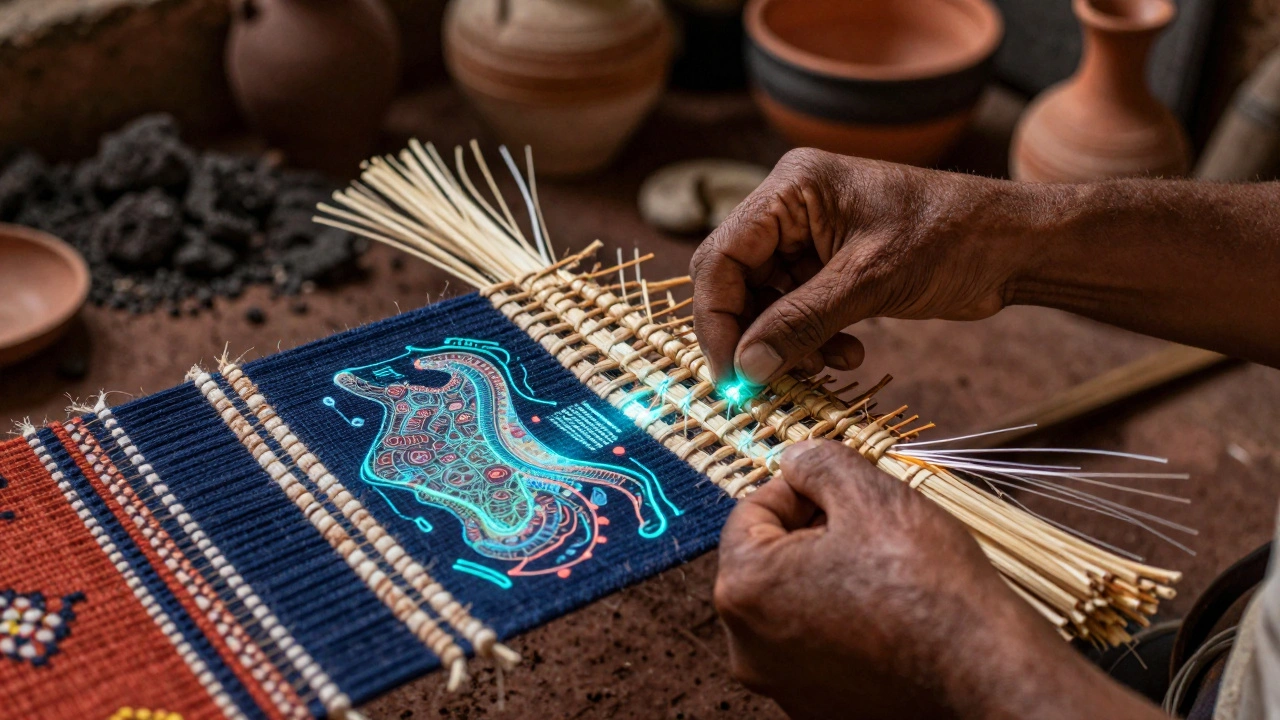
This is particularly strong in the Global South-a term describing regions in Latin America, Africa, and Asia that shared the experience of colonial rule. Artists here aren't just making 'pretty' things. They are using art to recover memories that were erased. For example, an artist might use traditional weaving patterns not as a 'folk' style, but as a coded language to record political resistance that was forbidden in writing during colonial times.
| Feature | Modernist (Western) Aesthetics | Decolonial Aesthetics |
|---|---|---|
| Goal | Universal beauty and formal innovation | Cultural liberation and ancestral recovery |
| Value | Market value and institutional prestige | Community relevance and spiritual utility |
| Perspective | The 'God's eye view' (objective) | Situated knowledge (subjective/local) |
| Medium | Preference for painting/sculpture | Hybridity (weaving, performance, oral history) |
Breaking the Commodity Cycle
One of the biggest problems in the current art market is Cultural Hegemony. This is when the dominant class controls the narrative so effectively that the oppressed start to believe the dominant view is the only 'natural' one. In art, this means we value a painting because a famous auction house says it's worth $10 million, not because it actually means something to the people it depicts.
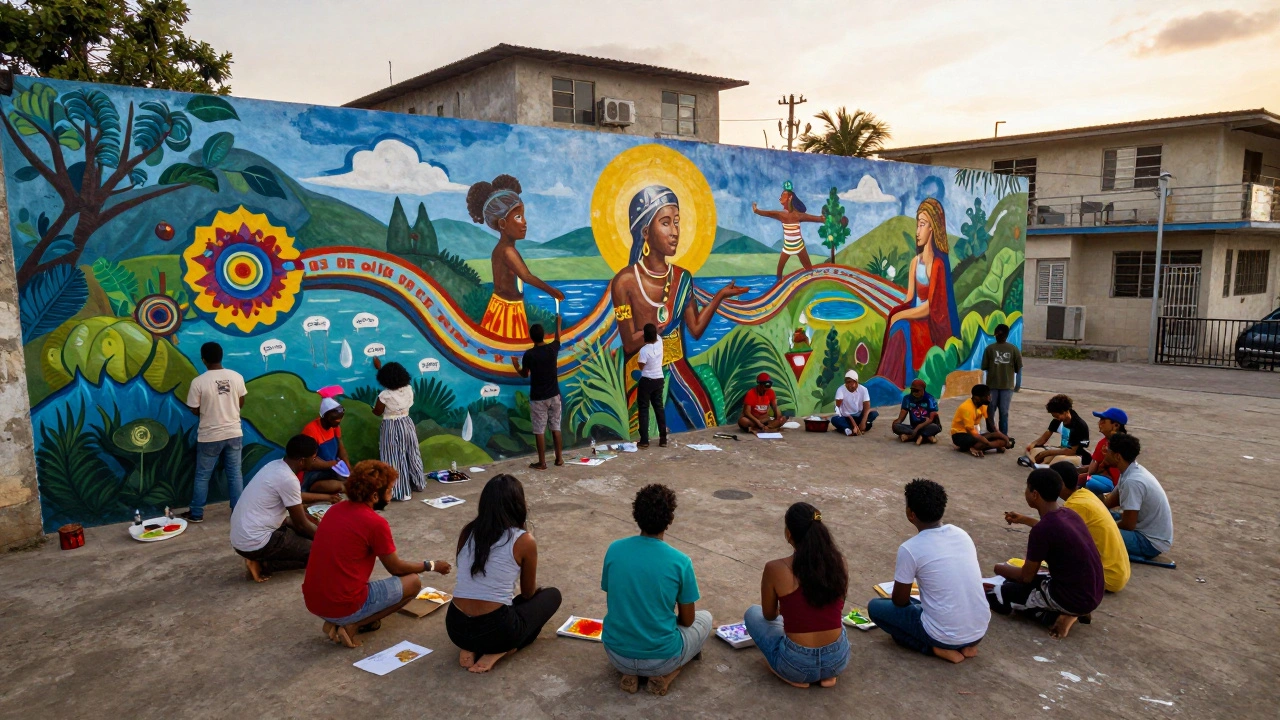
Decolonial art fights this by emphasizing the *process* over the *product*. If the act of creating the art involves a community coming together to heal from collective trauma, the final object is almost secondary. The 'art' is the conversation, the shared labor, and the act of remembering. This disrupts the capitalist model of art as a luxury good for the elite. When art becomes a tool for survival or political awakening, it ceases to be a mere decoration for a corporate lobby.
The Role of Hybridity and Third Space
Does decolonial art mean going back to exactly how things were 500 years ago? Not exactly. That's a common mistake. You can't just 'undo' history. Instead, many artists work in what Homi K. Bhabha calls the Third Space. This is the messy, overlapping area where colonial and indigenous cultures collide.
Hybridity is the secret weapon here. By mixing traditional materials-like corn husks or volcanic ash-with modern technology like digital projection or VR, artists create something entirely new. They aren't trying to be 'pure' (because purity is often a myth used by nationalists); they are trying to be honest. This honesty acknowledges that they are products of a colonial history, but they are the ones deciding how to navigate that history now.
Practical Challenges in Institutions
If you walk into a contemporary museum today, you'll see a lot of 'interventions.' An artist might place a modern sculpture next to a stolen colonial artifact to highlight the violence of the acquisition. This is a step toward decolonization, but it often feels like a band-aid. The real challenge is the Museum structure itself. Most museums are built as warehouses for trophies of empire.
True decolonial practice requires more than just a provocative exhibition. It requires repatriation-giving the art back to the communities it was taken from. It also requires changing who gets to be a curator. When the people deciding what is 'important' come from the same diverse backgrounds as the artists, the very definition of quality changes. We stop looking for 'technical mastery' by European standards and start looking for 'relational resonance'-how a work connects a person to their land, their ancestors, and their future.
Is decolonial aesthetics the same as post-colonialism?
Not quite. Post-colonialism generally describes the period after a colony gained political independence. Decolonial aesthetics is more about the mind and the spirit. It argues that even after the soldiers leave and the flag changes, the colonial way of thinking (the 'coloniality of power') remains. Decoloniality is the active process of stripping those mental frameworks away to make room for indigenous ways of knowing.
Does this mean Western art is no longer valuable?
No. It just means it is no longer the *only* standard. The goal isn't to destroy Western art, but to stop treating it as the universal benchmark for all human creativity. By recognizing that Western aesthetics are just one regional style among many, we can actually appreciate them more honestly, without the delusion that they are the 'peak' of human achievement.
How can I support decolonial art as a viewer?
Start by questioning the labels. When you see a piece described as 'primitive' or 'tribal,' ask why those words are used. Seek out artists directly from the Global South and read their own words rather than relying solely on a museum's wall text. Support artists who prioritize community impact over gallery sales, and be open to art that doesn't follow traditional rules of beauty or composition.
What is a concrete example of decolonial art?
Consider an artist who uses traditional Andean weaving to create a map of land stolen by mining companies. The weaving is a traditional skill, but the content is a political critique of modern extraction. By using a medium that was dismissed as 'craft' by colonizers to document a crime committed by the colonizing system, the artist performs a decolonial act.
Why is the 'Global South' such a key term in this discourse?
The Global South isn't just a geographic location; it's a political identity. It groups together people who have shared the experience of being marginalized by the same imperial powers. Because the trauma of colonialism was systemic across these regions, the resistance-and the resulting art-often shares similar goals: recovering identity, fighting erasure, and challenging the 'center' of the art world.
Moving Forward: Beyond the Gallery
If this movement succeeds, the future of art won't be found in a few massive hubs like Venice or Basel. Instead, we will see a network of local 'centers' where art is integrated back into daily life, spirituality, and politics. We are moving away from the era of the 'genius artist' working in a lonely studio and toward an era of collective creation.
The next step for anyone interested in this is to look at the gaps. Who is *not* being represented? Which stories are still being told through a Western lens? When we stop asking 'Is this good art?' and start asking 'Whose truth does this tell?' we finally begin to see the world in full color.