Curatorial Statements: How to Write a Compelling Exhibition Vision
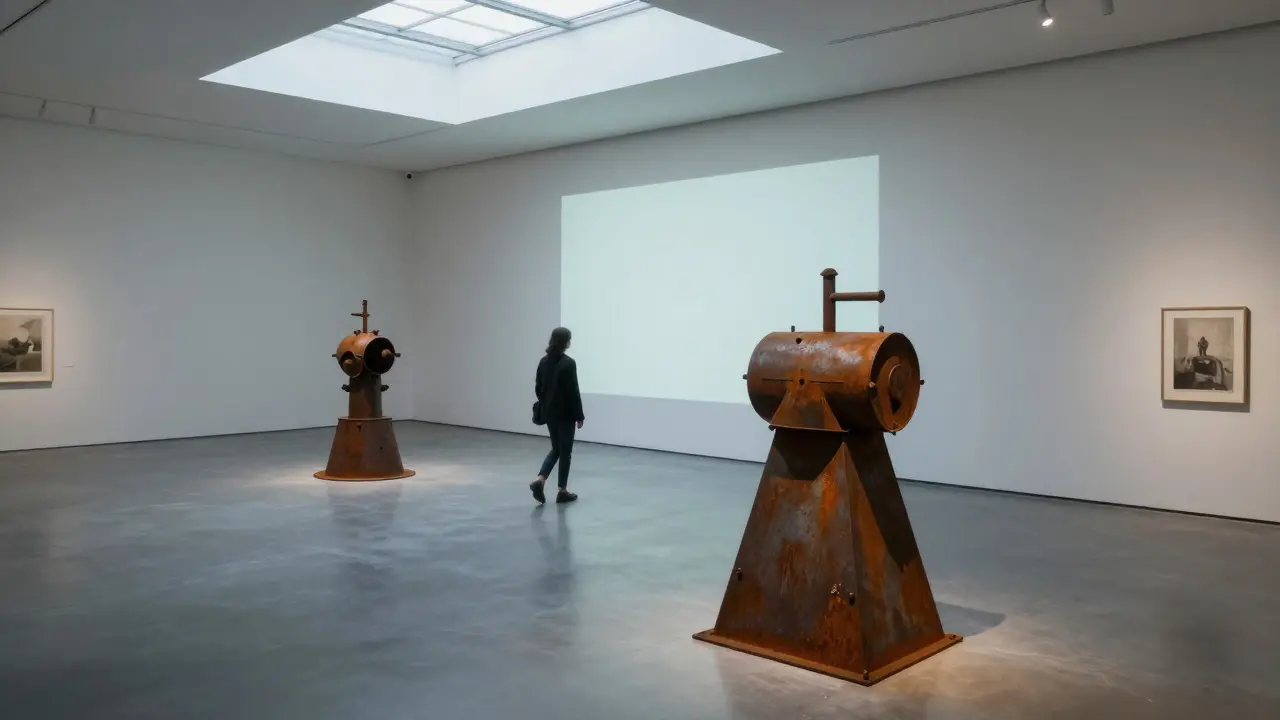
Ever walked into a gallery, read the wall text, and thought, "So what?" If that’s happened, you know how much a weak curatorial statement can drain the life out of an exhibition. This document isn’t just filler for the catalog or a requirement for grant applications. It is the intellectual backbone of your show. It tells visitors why these specific works belong together and what new meaning emerges from their proximity. Writing one feels harder than it should be because it requires balancing academic rigor with accessible storytelling. But when done right, it transforms a collection of objects into a coherent argument.
The Core Purpose of a Curatorial Statement
A curatorial statement serves as the bridge between the curator’s internal research and the public’s experience. Unlike an artist’s statement, which focuses on individual intent, a curatorial statement synthesizes multiple voices into a single narrative thread. Its primary job is to establish context. Without it, visitors are left to guess the connection between a 1920s sculpture and a 2025 digital installation. The statement provides the map. It answers the question: "What is this show about, and why does it matter now?"
Think of it as the thesis of your exhibition. Just like a good essay, it needs a clear claim supported by evidence (the artworks). If your claim is vague, the evidence will feel random. If your claim is sharp, even unrelated-looking pieces start to make sense. This is where curation moves from decoration to discourse.
Structuring Your Argument: From Thesis to Wall Text
You don’t write a curatorial statement in one go. It evolves alongside your selection process. Here is a practical workflow that helps maintain clarity:
- Identify the Central Tension: Every strong exhibition addresses a contradiction, a gap in knowledge, or a contemporary issue. Is it about the tension between tradition and innovation? Between local identity and global influence? Name it clearly.
- Draft the Abstract: Write a 3-paragraph summary. Paragraph 1: The big idea. Paragraph 2: How the artworks illustrate it. Paragraph 3: Why the visitor should care. Keep it under 300 words initially.
- Select Supporting Works: Choose pieces that directly support your abstract. If a piece doesn’t fit the narrative, it goes. Don’t force it.
- Refine the Language: Remove jargon. Replace "juxtaposition" with "placed side-by-side." Replace "hegemonic structures" with "power dynamics." Speak to humans, not other academics.
- Test for Clarity: Read it aloud. If you stumble, the sentence is too complex. Simplify it.

Common Pitfalls That Weaken Your Narrative
Many curators fall into the trap of describing rather than interpreting. Saying "This painting shows a landscape" is description. Saying "This landscape reveals the anxiety of industrial expansion" is interpretation. The latter belongs in a curatorial statement. The former belongs in the label card.
Another frequent mistake is over-crowding. Trying to cover five different themes in one show dilutes the message. Pick one strong thread and pull it tight. Visitors remember one clear idea far better than three muddy ones. Also, avoid passive voice. Instead of "The works were selected to demonstrate...", try "We selected these works to demonstrate..." Active voice creates ownership and energy.
Tailoring Tone for Different Audiences
Your audience determines your vocabulary. A university museum might tolerate denser theoretical language than a community center gallery. However, even in academic settings, clarity wins. Consider using a tiered approach:
- Headline/Title: Provocative and short. E.g., "Silent Voices: Women in Tech History."
- Introductory Statement: The core argument. Accessible, engaging, roughly 400-600 words.
- Section Introductions: Break down the main argument into sub-themes. Short paragraphs that guide the physical flow of the gallery.
- Object Labels: Specific facts, dates, materials, and brief interpretive notes. No broad theory here.

Practical Examples of Strong vs. Weak Statements
Let’s look at two hypothetical openings for an exhibition on urban decay.
Weak: "This exhibition features various artworks depicting cities. The artists use different mediums such as paint and photography. The show explores the theme of decline in modern architecture."
Strong: "Concrete scars remain long after the cranes leave. This exhibition examines how post-industrial landscapes become sites of memory. By pairing archival photographs of abandoned factories with contemporary installations made from reclaimed steel, we ask: Do we preserve ruins, or do we let them disappear? The following works challenge the notion that progress requires erasure."
Notice how the strong version has a point of view. It asks a question. It connects the medium (reclaimed steel) to the message (memory). It invites the viewer to think, not just look.
Integrating Research and Accessibility
Curation is research. You need to understand the historical context of each piece. But you also need to translate that research into plain language. Use specific data points to ground your claims. Instead of saying "many people suffered," say "during the 1970s housing crisis, 40% of residents in District 9 faced eviction." Specificity builds trust. It shows you did the work. It also makes the emotional weight of the topic more tangible.
Remember, the goal is not to prove you’re smart. The goal is to make the visitor feel smarter. When they leave the gallery, they should have a new lens through which to see the world. That is the true measure of a successful curatorial statement.
How long should a curatorial statement be?
For most gallery exhibitions, the main introductory statement should be between 400 and 800 words. For large-scale museum installations, it can extend to 1,000-1,500 words if broken into sections. Always prioritize clarity over length. If you can cut 50 words without losing meaning, do it.
What is the difference between a curatorial statement and an exhibition title?
The title is the hook; the statement is the explanation. The title should be memorable and concise (e.g., "Echoes of Silence"). The statement expands on that hook, providing context, argument, and narrative structure. The title draws people in; the statement keeps them engaged.
Should I include artist names in the main curatorial statement?
Usually, no. Save specific artist names for section introductions or object labels. The main statement should focus on themes, concepts, and arguments. Listing every artist upfront can clutter the narrative and distract from the central idea. Let the works speak for themselves within the broader context you’ve established.
How do I handle controversial topics in my statement?
Be precise and fair. Avoid inflammatory language unless it is part of the artistic critique. Acknowledge complexity. For example, instead of "This show exposes the villainy of X," try "This show interrogates the legacy of X, presenting multiple perspectives on its impact." Precision protects your credibility and invites deeper engagement.
Can I update the curatorial statement after the exhibition opens?
Yes, but rarely. Minor typos or factual errors should be corrected immediately. Major changes to the narrative usually indicate a problem with the initial planning. However, if visitor feedback reveals a significant misunderstanding, you might add a clarifying note in the digital version or a supplementary panel. Consistency is key for brand trust.