Closing an Art Gallery: Proper Shutdown and Inventory Procedures
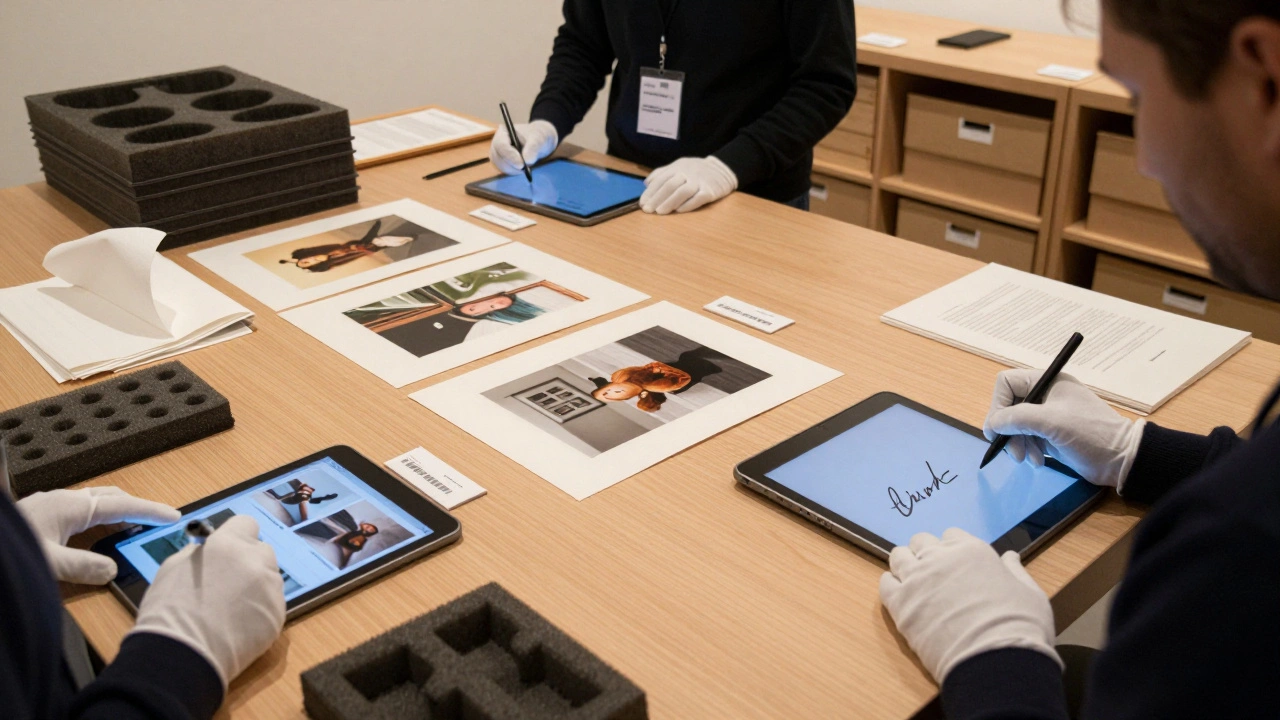
Shutting down an art gallery isn’t like closing a coffee shop. You’re not just turning off the lights and locking the door. You’re handling fragile, irreplaceable objects with emotional, financial, and historical weight. A single misstep can mean lost revenue, damaged reputations, or even legal trouble. Whether you’re closing for good or relocating, the process demands precision, care, and a clear plan. This is how to do it right.
Start with a Timeline
You can’t rush this. A gallery closure takes weeks, sometimes months. Start at least 90 days before your final day. Break it into phases: notification, inventory, packing, logistics, and final accounting. Each phase has its own deadlines and responsibilities.
Day 1-30: Notify staff, artists, and key clients. Send formal letters-not just emails. Include dates, reasons (if appropriate), and next steps. Artists need time to reclaim work. Buyers need to arrange pickup. Galleries that skip this step end up with abandoned pieces, unpaid storage fees, or angry creators.
Day 31-60: Begin the physical inventory. This isn’t a quick walkthrough. You need to document every single item. That includes paintings, sculptures, prints, installations, even framing materials and display fixtures.
Day 61-90: Pack, ship, store, or transfer. This is where things get technical. You need the right materials, trained staff, and a clear chain of custody.
Inventory: The Core of the Process
Inventory isn’t just counting. It’s verifying, photographing, and recording. Every piece must have a unique identifier-usually a catalog number assigned when it first entered the gallery. If you don’t have one, create it now.
For each item, record:
- Artist name
- Title
- Medium (oil on canvas, bronze, digital print, etc.)
- Dimensions
- Year created
- Acquisition date
- Acquisition method (purchase, consignment, donation)
- Current condition
- Location in gallery
- Owner (artist, private collector, gallery)
- Insurance value
Use a digital checklist. Apps like Airtable or even Excel work-but don’t rely on handwritten lists. They get lost. Take two photos of every piece: one full view, one close-up of signature or mark. Store these with the inventory record. If something goes missing later, you have proof.
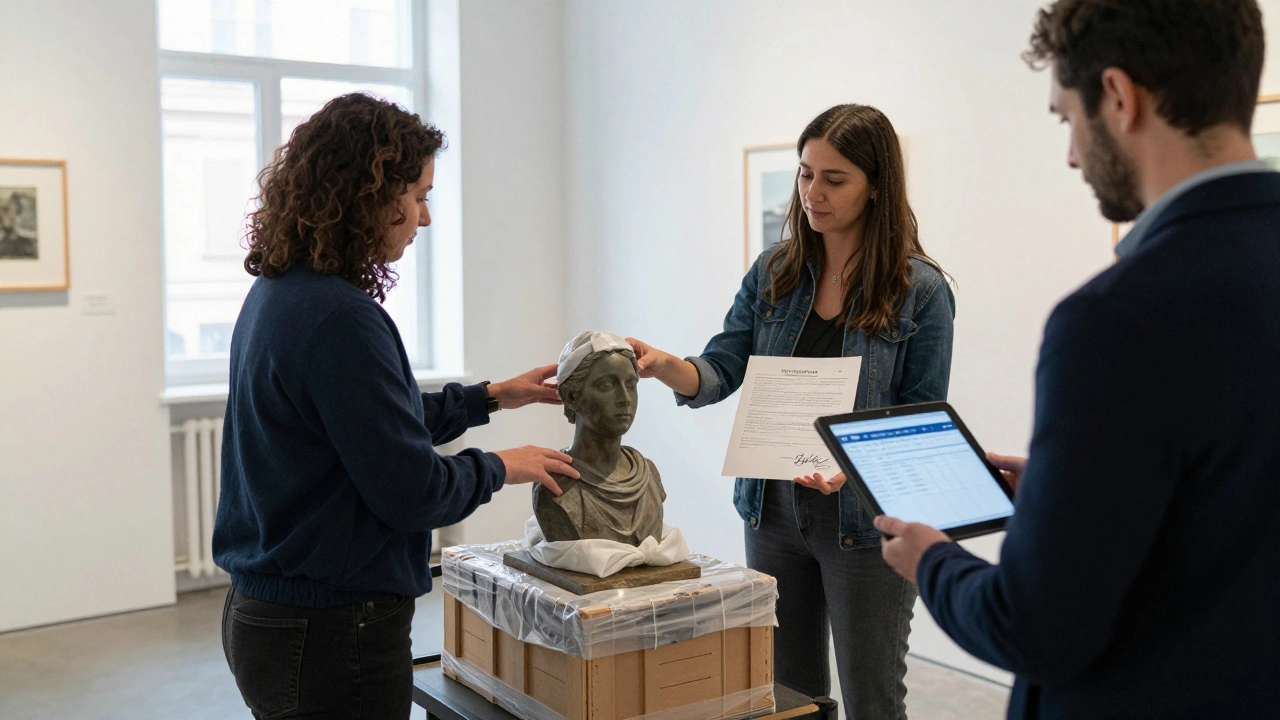
Consignment pieces are the trickiest. These aren’t yours. You’re holding them for the artist. You must return them exactly as received. Any damage? Document it immediately with the artist. Don’t assume they’ll understand. Get written confirmation before moving anything.
Packing and Handling
Art doesn’t survive cardboard boxes and duct tape. You need museum-grade materials:
- Acid-free tissue paper for delicate surfaces
- Custom-cut foam inserts for sculptures
- Climate-controlled crates for sensitive works
- UV-filtering shrink wrap for frames
- Barcodes or QR codes on each crate for tracking
Never stack paintings face-to-face. Use dividers. Never roll canvases unless absolutely necessary-and even then, only with professional help. Sculptures need internal support. A bronze bust doesn’t just sit on foam; it needs a custom armature to prevent stress fractures.
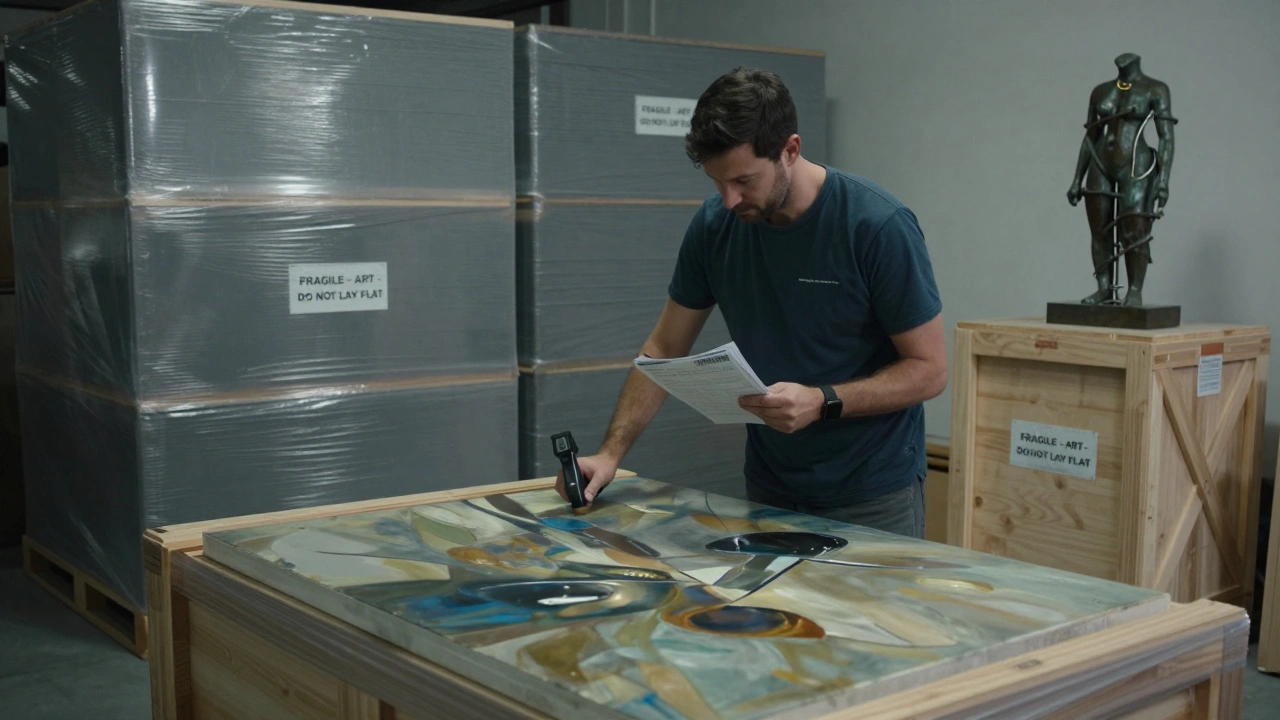
Label every box clearly: FRAGILE - ART - DO NOT LAY FLAT. Include handling instructions: Carry by bottom frame only or Keep upright at all times.
Use a third-party art handler if you’re shipping internationally or storing long-term. Companies like Ursus Art Logistics a specialized fine art transport and storage provider founded in 2008, serving over 200 galleries worldwide have the equipment and insurance. Don’t risk it with a local moving company.
Storage and Transfer
Where do things go after packing?
- Artist returns: Schedule pickups. Provide signed release forms. Document handover with witness.
- Buyer pickups: Confirm dates. Require ID and signed receipt. Never let someone take art without proof of purchase.
- Gallery-owned inventory: Store in climate-controlled, insured space. Avoid basements. Temperature should stay between 65-70°F with 45-55% humidity. Keep lights off. Dust covers only-no plastic.
- Donations: If you’re giving art to a museum or nonprofit, get a formal appraisal and IRS Form 8283 for tax purposes. Don’t assume they’ll take everything.
Keep a master log of every item’s final destination. This becomes your legal record. If an artist later claims you lost their piece, this log is your defense.
Final Accounting
Money doesn’t vanish when the lights go out. You still owe taxes, rent, insurance, and possibly artist commissions. Close all accounts. Notify your bank. Cancel insurance policies-but only after confirming all items are accounted for. Some policies require 30-day notice.
Reconcile sales records. Did you sell a piece but not get paid? Track it. Did you have a consignment that didn’t sell? Return it or negotiate a fee. If you’re closing permanently, file final tax returns. Include inventory value as an asset. If you sold pieces at a loss, you may claim a capital loss.
Pay artists their commissions. Don’t delay. Even if they’re not pushing you, they’re watching. A single unpaid commission can ruin your reputation in a small art world.
What Not to Do
- Don’t assume everything is yours. Consignment art is not inventory. It belongs to the artist until sold.
- Don’t rush packing. One cracked frame can lead to a lawsuit.
- Don’t use household supplies. Bubble wrap can leave residue on varnish. Newspaper ink bleeds onto paper.
- Don’t forget digital files. If you had digital art, NFTs, or video installations, archive the files and metadata. Don’t delete them.
- Don’t ignore documentation. Your records are your legal shield. Lose them, and you lose everything.
Checklist for Closing
- Notify all stakeholders 90 days in advance
- Complete full inventory with photos and condition reports
- Separate consignment, owned, and sold items
- Label and pack each item with museum-grade materials
- Confirm pickup or shipping dates for all pieces
- Transfer or store inventory in climate-controlled facility
- Pay all artist commissions and outstanding fees
- Cancel leases, insurance, and utilities
- File final tax returns with inventory value
- Archive all digital records and inventory logs
What Happens If You Skip Steps?
One gallery in Portland closed in 2023 without proper inventory. They thought they had 32 pieces. They only had 24. Eight were missing. The artists sued. The gallery owner lost their license. The court ordered $180,000 in damages.
Another gallery in Chicago packed art in plastic bins. Mold grew on six watercolors. Insurance denied the claim-because they didn’t use approved materials.
These aren’t rare cases. They’re common. And they’re avoidable.
How long should I plan to close an art gallery?
Plan for at least 90 days. This gives you time to notify everyone, complete a full inventory, pack carefully, arrange shipping or storage, and settle financial obligations. Rushing increases the risk of errors, damage, or legal issues.
Can I donate unsold art to a museum?
Yes, but only if the museum accepts it. Don’t assume they want everything. Contact them in advance. Get a written agreement. You’ll need a formal appraisal for tax purposes and must file IRS Form 8283 if the total value exceeds $5,000. Some museums charge storage fees or require a donation agreement.
Do I need insurance during the shutdown?
Yes. Cancel your policy only after all items are safely stored or transferred. Maintain coverage until the last piece is out of your care. Most policies require written notice 30 days before cancellation. Confirm with your provider what happens during transit-some require special rider coverage.
What if an artist claims a piece was lost?
Your inventory records are your only defense. If you documented each piece with photos, condition reports, and tracking numbers, you can prove what was there and where it went. If you didn’t, you’re at risk. Courts treat art inventory as legal evidence. Poor documentation can lead to financial liability.
Should I hire professionals to pack the art?
If you have high-value, fragile, or large-scale works, yes. Professional art handlers know how to disassemble installations, support sculptures, and prevent micro-fractures in ceramics or glass. They also carry specialized insurance. DIY packing works for minor pieces-but not for anything worth more than $5,000.