Ceiling Design for Art Galleries: Heights, Grids, and Rigging Guide
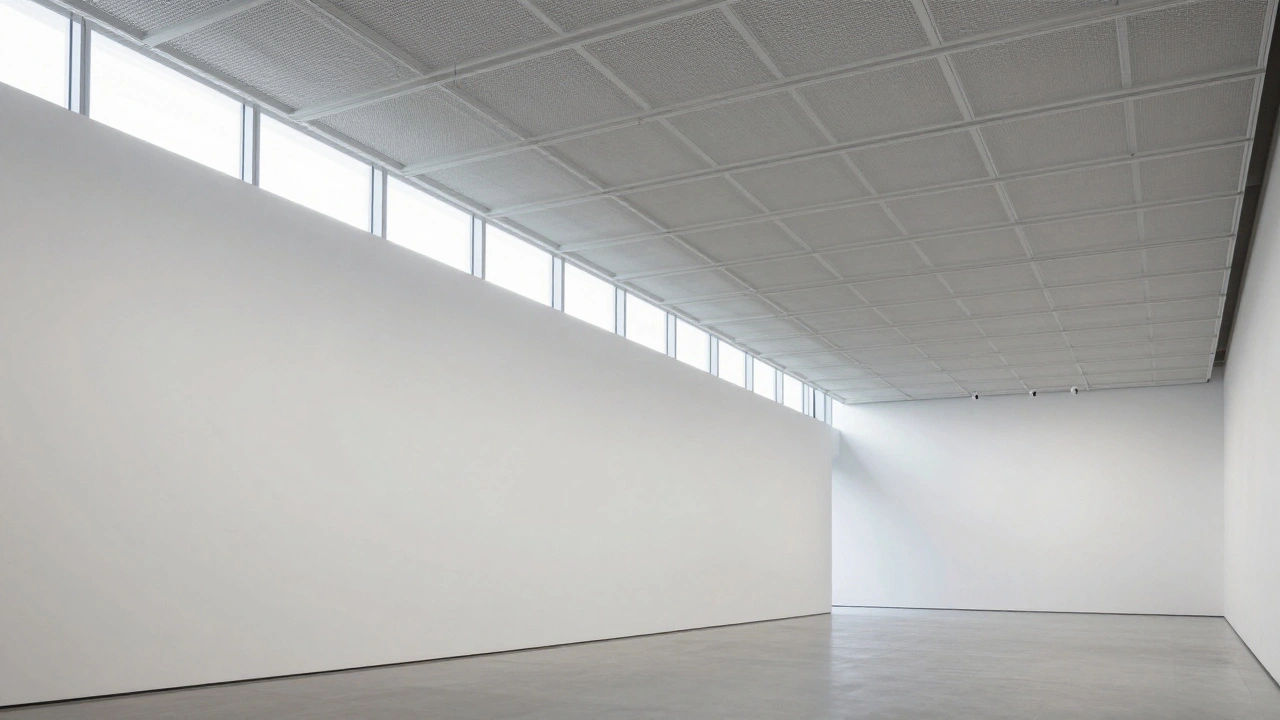
Walk into a poorly designed gallery, and you’ll notice it immediately. The lights buzz. The tracks look messy. You can’t move the artwork without calling an electrician. It kills the vibe before you even see the paintings. Good ceiling design for art galleries is the structural and aesthetic framework that supports lighting, climate control, and artwork display while remaining visually unobtrusive. It’s not just about looking nice from below. It’s about giving curators the freedom to change exhibitions every six weeks without rebuilding the room.
I’ve worked on dozens of exhibition spaces, from small pop-up shows in converted warehouses to permanent installations in historic buildings. The biggest mistake designers make is treating the ceiling as a finished surface rather than a functional tool. If you get the heights, grids, and rigging wrong, you’re stuck with a static space that fights your curation. Let’s break down how to build a ceiling system that actually works for art.
The Golden Rule of Gallery Ceiling Heights
Height dictates everything. It changes how people feel in the room, how light falls on the walls, and what kind of HVAC equipment you can hide above the grid. For standard picture galleries, you want a clear floor-to-ceiling height of at least 10 feet (3 meters). This gives you enough vertical wall space for medium-sized canvases without making them look cramped.
If you’re dealing with large-scale installations or sculpture, you need more. Aim for 14 to 16 feet (4.2 to 4.8 meters). This extra volume allows for overhead projections, suspended sculptures, and dramatic lighting angles. However, taller ceilings come with trade-offs. They cost more to heat and cool, and they require longer ladder access for maintenance. Don’t go tall just because it looks impressive in the renderings. Go tall if your collection demands it.
For low-budget spaces or residential galleries, you can squeeze by with 8 to 9 feet (2.4 to 2.7 meters), but you lose flexibility. You won’t be able to hang anything from the ceiling, and your lighting options become limited to wall-washers only. Always measure the structural slab height, not the finished drywall height. That difference of 12 inches matters when you’re trying to fit ductwork and electrical conduits.
Choosing the Right Ceiling Grid System
The grid is the skeleton of your ceiling. It holds up the tiles, the lights, and the speakers. In most commercial galleries, you’ll see two main types: exposed metal deck and suspended acoustic tile systems.
Suspended acoustic ceilings are modular grid systems made of metal channels that hold lightweight panels, allowing easy access to utilities above. These are the workhorses of gallery design. Brands like Armstrong World Industries or USG Boral offer grids in 2x2 foot or 2x4 foot modules. The 2x4 layout is usually better for galleries because it creates fewer visual interruptions and aligns better with standard track lengths.
Exposed concrete or metal decks are trendy in industrial-style spaces. They save money on materials but create acoustic nightmares. Concrete reflects sound waves, creating echoes that distract visitors. If you must use an exposed deck, you’ll need to add baffles or cloud absorbers to dampen the noise. Otherwise, your quiet contemplative space will feel like a subway station.
When selecting your grid, pay attention to the load rating. Standard residential grids hold about 5 pounds per square foot. Gallery grids should handle at least 15 to 20 pounds per square foot to support heavy track lighting systems and occasional rigging points. Ask your contractor for "heavy-duty" or "high-strength" channel specifications.
Track Lighting vs. Recessed Systems
Lighting is where most gallery budgets bleed out. You have two choices: hardwired recessed fixtures or adjustable track systems. For 90% of galleries, track lighting is the only logical choice.
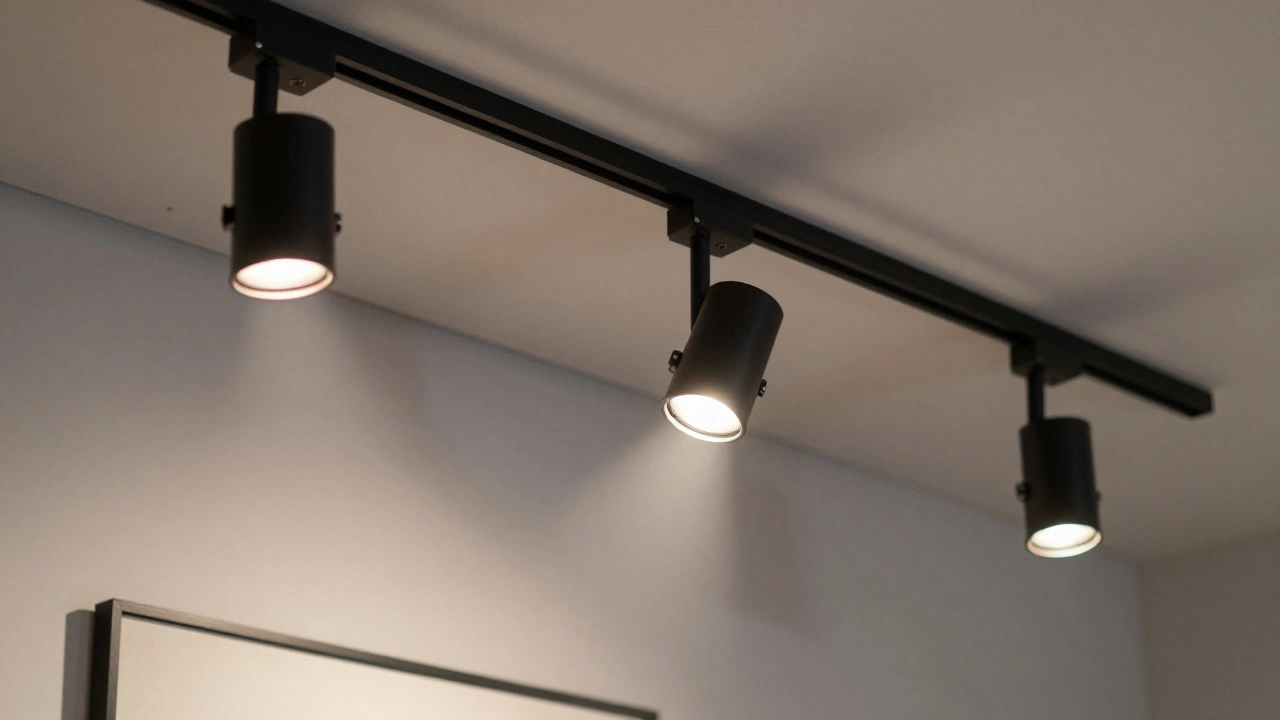
Track lighting systems are electrical distribution networks mounted to the ceiling that allow individual luminaires to be moved, added, or removed without rewiring. Popular brands include LEDVANCE OSRAM, Philips Professional, and ERCO. ERCO is the gold standard for museums, offering precision optics that prevent glare on glass frames. It’s expensive, but the light quality is unmatched.
Recessed cans look clean, but they’re fixed. Once you install them, you can’t move them. If you rotate your exhibition, you’ll have dark spots on new artworks and bright spots on empty walls. Track systems let you slide heads along the rail, adjust the angle, and swap out spot sizes. Use narrow beams (15-24 degrees) for detailed paintings and wider floods (36-60 degrees) for larger canvases.
Avoid using RGBW color-changing tracks unless you’re doing digital media art. For traditional painting and photography, stick to high-CRI (Color Rendering Index) white LEDs. Aim for a CRI of 90+ and a color temperature between 2700K and 3000K. This mimics natural daylight without the UV damage risk. Higher temperatures (4000K+) make skin tones look sickly and oil paints look sterile.
Rigging Points and Flexible Hanging
This is the part most designers ignore until the first installation. How do you hang things? If you only have wall tracks, you’re limited to two-dimensional displays. A true gallery needs overhead rigging capabilities.
You don’t need a full theatrical fly system. Instead, integrate discreet rigging points into your ceiling grid. Use threaded inserts are metal anchors embedded in the ceiling structure that provide secure attachment points for cables and chains. spaced every 4 to 6 feet along the main grid lines. Cover them with flush-mounted plates so they disappear when not in use.
For heavier loads, like kinetic sculptures or large mirrors, you need direct structural connections. Run steel rods up through the ceiling tiles into the concrete slab above. Never rely solely on the suspended grid to hold heavy objects. The grid is for lights and air vents, not for holding 200-pound bronze statues.
Consider installing a simple cable management system. Use black-coated steel cables and quick-connect clamps. This lets your installation team drop elements from the ceiling in minutes rather than hours. I once watched a curator spend three days trying to hang a mobile because there were no pre-installed points. Don’t let that happen to you.
Hiding the Infrastructure
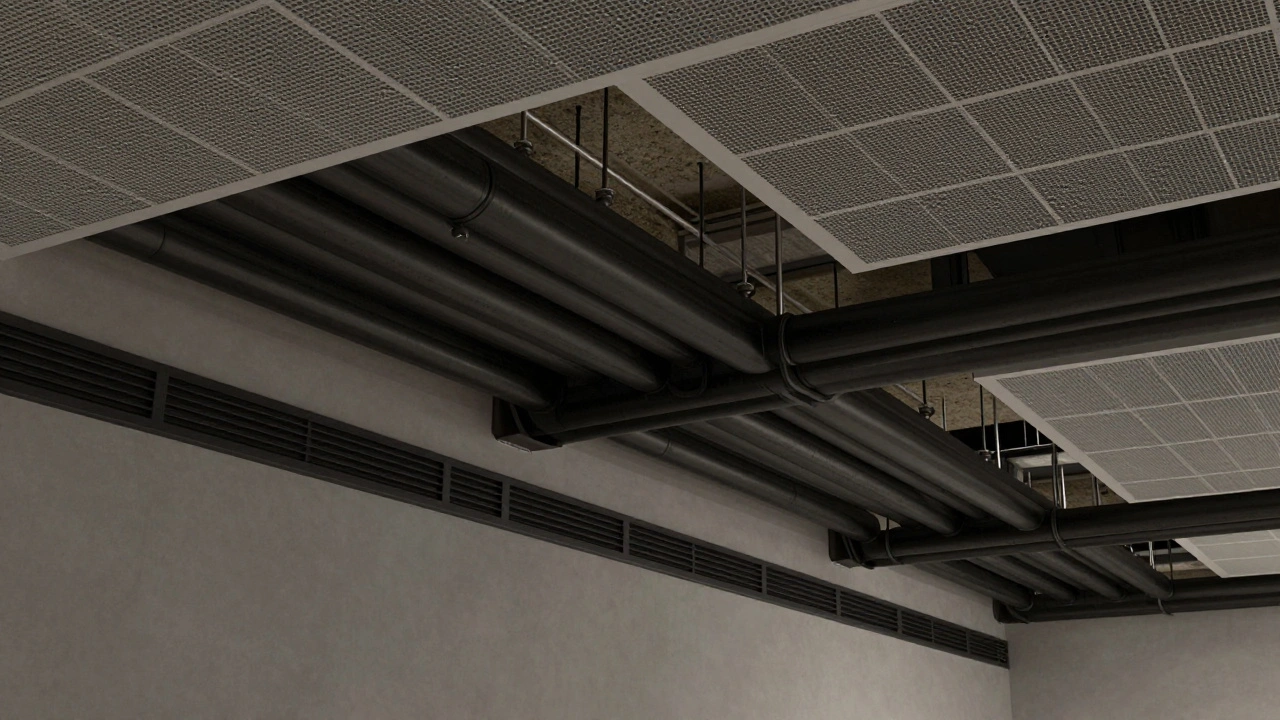
The best gallery ceiling is one you don’t notice. But it’s full of wires, pipes, and ducts. The trick is concealment. Use the plenum space (the area above the dropped ceiling) wisely.
Group all electrical conduits together in one corner of the grid bay. Keep the center clear for airflow and future expansion. Paint all visible pipes and ducts matte black. Black absorbs light and shadows, making infrastructure less visible from below. White pipes reflect light and draw the eye upward, distracting from the art.
Integrate your HVAC diffusers carefully. Avoid large square grilles in the middle of the room. Use linear slot diffusers that run parallel to the walls. This keeps the center of the ceiling clean and ensures air flows evenly across the room without blowing dust onto the artwork. Low velocity is key. High-speed air currents cause vibration in delicate pieces and settle particulate matter on surfaces.
| Component | Best For | Key Attribute | Cost Level |
|---|---|---|---|
| Suspended Grid | Standard Galleries | Modularity & Access | Moderate |
| Exposed Deck | Industrial Spaces | Raw Aesthetic | Low |
| ERCO Tracks | Fine Art | Precision Optics | High |
| Threaded Inserts | Rigging | Load Capacity | Low |
Common Pitfalls to Avoid
I’ve seen these mistakes too many times. First, ignoring acoustics. Hard surfaces bounce sound. Add fabric-wrapped panels or wood slats to absorb noise. Second, over-lighting. Brighter isn’t better. Use dimmers to control intensity. Third, forgetting maintenance. Leave access panels near junction boxes. You’ll thank yourself when you need to replace a transformer in year five.
Finally, don’t skimp on the controls. Install a smart lighting system that allows scene setting. One button should switch the room from "opening night" mode to "daily viewing" mode. It saves energy and reduces wear on the bulbs. Your ceiling design is the foundation of the visitor experience. Get it right, and the art speaks for itself.
What is the ideal ceiling height for a small art gallery?
For a small gallery focusing on paintings and photographs, aim for a minimum clear height of 10 feet (3 meters). This provides sufficient wall space for standard framing and allows for basic track lighting installation without feeling cramped.
Can I use recessed lighting instead of track systems?
You can, but it limits your flexibility. Recessed lights are fixed in place, meaning you cannot adjust them when rotating exhibitions. Track systems are recommended for their ability to move, aim, and replace individual heads easily.
How do I hide HVAC ducts in a gallery ceiling?
Use a suspended ceiling grid to conceal ducts above the plenum space. Group ducts in corners and use linear slot diffusers along the perimeter walls to maintain a clean central appearance while ensuring even air distribution.
What type of rigging points are safe for hanging sculptures?
For light items, threaded inserts in the grid may suffice. For heavy sculptures, always use steel rods connected directly to the structural slab above the ceiling. Never rely on the suspended grid alone for significant weight.
Why is acoustic treatment important in gallery ceilings?
Hard ceilings reflect sound, creating echoes that disrupt the quiet atmosphere needed for art appreciation. Acoustic panels or tiles absorb noise, reducing reverberation time and improving the overall visitor experience.