Budgeting for Art Collecting: How to Allocate Funds and Choose Price Points
You walk into a gallery. A painting catches your eye. It’s vibrant, it speaks to you, and then you see the price tag. Your stomach drops. This is the moment most people decide they aren’t "real" collectors. But here’s the truth: collecting art isn’t about having unlimited money. It’s about having a plan. Without a budget, you’re just spending. With one, you’re building something lasting.
Whether you have $500 or $50,000 to start, the mechanics of Budgeting for Art Collecting are the same. You need to know how much to spend per piece, where that money comes from, and what happens when you want to sell later. Let’s break down the math so you can buy with confidence, not fear.
The Foundation: Defining Your Total Budget
Before you look at a single canvas, you need to define your total annual limit. Many new collectors make the mistake of treating art as an expense like dining out. It’s not. It’s an asset class, albeit an illiquid one. Treat it like real estate or stocks.
Start by looking at your disposable income. Financial advisors often suggest keeping high-risk assets under 10% of your net worth. For art, let’s be more conservative. Aim for 1-3% of your liquid savings. If you have $100,000 in savings, your art budget might be $1,000 to $3,000 a year. That sounds small, but it allows you to buy three solid works from emerging artists without impacting your lifestyle.
Crucially, this budget must include more than just the purchase price. There are hidden costs that eat up 15-20% of your total spend if you aren’t careful. These include:
- Artist’s Premium: Some galleries add a fee on top of the listed price.
- Framing: A good frame can cost 10-20% of the artwork’s value.
- Shipping and Insurance: Crating and insured transit are non-negotiable for pieces over $500.
- Taxes: Depending on your location, sales tax applies.
If you find a painting for $1,000, expect to pay $1,200 once it’s hanging on your wall. Factor this in from day one.
Understanding Price Points and Tiers
Art prices aren’t linear. They jump in tiers based on the artist’s career stage. Knowing these tiers helps you set realistic expectations. Here is how the market generally segments itself in 2026:
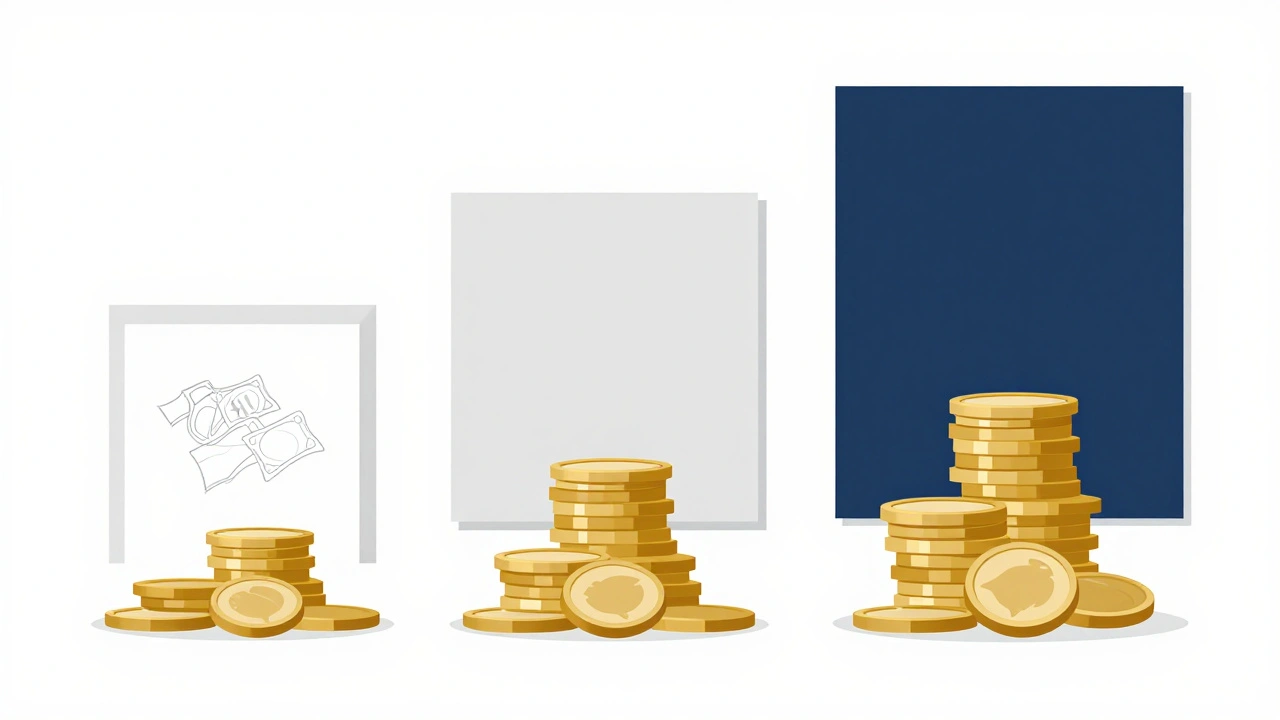
| Tier | Price Range (USD) | Artist Status | Risk Level | Best For |
|---|---|---|---|---|
| Entry-Level | $200 - $1,500 | Student / Early Career | High | Decor / Learning |
| Mid-Market | $1,500 - $10,000 | Established Emerging | Medium | Serious Collectors |
| Blue-Chip | $10,000 - $100,000+ | Gallery Represented / Museum History | Low-Medium | Investment / Prestige |
| Ultra-High Net Worth | $100,000+ | Historical Masters / Top Contemporary | Variable | Wealth Preservation |
Most new collectors should start in the Entry-Level or low Mid-Market tier. Why? Because it lowers the stakes. If you buy a $500 print and don’t love it after six months, the loss is manageable. If you drop $20,000 on your first piece and regret it, you’ll likely stop collecting entirely. Start small to train your eye.
Allocation Strategies: How to Split Your Money
Having a budget is step one. Allocating it is step two. You shouldn’t spend your entire yearly budget on one massive piece unless you’re very experienced. Diversification protects you from bad tastes and market shifts. Here are three common allocation models:
1. The Core-Satellite Approach
This is the safest route for beginners. Allocate 70% of your budget to "core" purchases-pieces you love deeply and intend to keep forever. Use the remaining 30% for "satellite" experiments. Maybe you try a sculpture, a photograph, or a work by an artist outside your usual style. If the experiment fails, you only lost 30%. If it succeeds, you’ve expanded your collection’s diversity.
2. The Consistent Cadence Model
Instead of hunting for one big piece, set a quarterly goal. If your annual budget is $4,000, aim to buy one piece every three months for $1,000. This forces you to stay engaged with the market. You visit galleries regularly, attend fairs, and build relationships with gallerists. Consistency beats intensity in art collecting.
3. The Theme-Based Allocation
Decide on a theme before you spend. Maybe you collect only landscape paintings, or only works by female artists from Southeast Asia. Then, allocate your budget specifically to deepen that niche. This makes your collection coherent and valuable. A scattered collection of random pretty pictures has less resale value than a focused group of ten works on a specific subject.
Hidden Costs: The Real Cost of Ownership
We mentioned shipping and framing earlier, but there’s more. Once the art is in your home, it requires care. Ignoring these costs leads to budget blowouts.
Insurance is critical. Standard homeowner’s insurance often caps coverage for individual items at $1,000-$2,000. If you own a $5,000 painting, you need a "rider" or a separate fine art policy. Expect to pay 1-2% of the artwork’s value annually in premiums. For a $5,000 piece, that’s $50-$100 a year.
Storage matters too. If you buy more art than you can display, you need climate-controlled storage. Self-storage units that aren’t climate-controlled can warp canvases and fade pigments. Professional art storage facilities charge by the square foot, typically ranging from $3 to $8 per month per piece depending on size and security level.
Maintenance includes professional cleaning and restoration. Oil paintings may need varnish removal every 15-20 years. Paper works require UV-filtering glass to prevent fading. Budget $100-$300 annually for maintenance if your collection grows beyond five pieces.
Where to Buy: Gallery vs. Online vs. Auction
Your choice of vendor impacts your budget significantly. Each channel has different markup structures.
Galleries typically take a 50% commission on the sale price. If an artist asks for $1,000, the gallery sells it for $2,000. You pay the higher price, but you get provenance, authenticity certificates, and relationship building. This is the best place for serious mid-market collecting.
Online Platforms like Artsy, Saatchi Art, or Etsy vary wildly. Artists selling directly on platforms like Etsy or Instagram keep more profit, meaning lower prices for you ($200-$800 range). However, you lack the vetting process. You must verify authenticity yourself. Platforms like Artsy aggregate gallery listings, so prices remain similar to brick-and-mortar galleries.
Auctions seem cheap until you add the "buyer’s premium." Houses like Sotheby’s or Christie’s charge 15-25% on top of the hammer price. A painting sold for $10,000 actually costs you $12,500+. Auctions are risky for beginners because condition reports can be vague. Stick to auctions only if you have a clear target and have seen the work in person.
Building Relationships Over Transactions
The smartest collectors don’t just buy; they network. Gallerists notice who buys consistently. If you show up to openings, ask questions, and buy smaller works early, they will save larger pieces for you. This access is invaluable. You might get first dibs on a work before it hits the secondary market at inflated prices.
Treat your budget as a tool for relationship building. Spend $500 on a local artist you meet at a fair. Follow their career. In five years, that $500 piece might be worth $5,000, but more importantly, you now have a direct line to the artist’s studio. That connection opens doors no amount of money can buy instantly.
When to Sell: Liquidity and Exit Strategies
Art is illiquid. You cannot sell a painting as quickly as you can sell a stock. Plan for a holding period of 5-10 years minimum. If you need cash next year, art is the wrong place to put it.
When you do decide to sell, consider the tax implications. In many jurisdictions, art is considered a capital asset. Profits may be taxed at a higher rate than standard capital gains. Consult a tax professional before making large sales. Also, remember that reselling through a gallery means they will take another 50% cut. To maximize returns, private sales between collectors are often more efficient, though harder to arrange.
Common Pitfalls to Avoid
Buying for Investment Only: Never buy art solely because you think it will go up in value. The market is unpredictable. Buy what you love. If the value goes up, great. If it doesn’t, you still have beauty in your home.
Ignoring Condition: A cheap painting with water damage or stretched canvas tears is a money pit. Always inspect the back and edges of a work. Ask for a condition report.
Chasing Trends: Don’t buy AI-generated art just because it’s hot in 2026. Trends fade. Focus on artistic merit, technique, and emotional resonance. These qualities endure longer than hype cycles.
How much should I spend on my first piece of art?
Aim for an amount that feels comfortable losing completely. For most beginners, this is between $200 and $1,000. This range allows you to buy quality work from emerging artists without financial stress. It also covers the additional costs of framing and shipping.
Is art a good investment compared to stocks?
Generally, no. Stocks offer liquidity and consistent historical returns. Art is illiquid, expensive to maintain, and highly speculative. While some blue-chip art appreciates significantly, most art does not beat the S&P 500. Collect art for passion, not primarily for profit.
What is the buyer's premium at auction?
The buyer's premium is an additional fee charged by auction houses on top of the final bid price. It typically ranges from 15% to 25%, depending on the house and the price of the lot. Always calculate this fee into your maximum bid to avoid overspending.
Do I need special insurance for art?
Yes, if the piece is valued above your homeowner's insurance sub-limit (usually $1,000-$2,000). You should add a "rider" or "floater" to your policy or purchase a standalone fine art insurance policy. This ensures full replacement value coverage for theft, damage, or disappearance.
How do I verify the authenticity of online art?
Request a Certificate of Authenticity (COA) signed by the artist or their estate. Check the seller’s reputation and return policy. For higher-value items, ask for provenance documentation showing the history of ownership. Reputable online platforms often provide these documents automatically.