Authenticating Sculpture: A Guide to Foundry Marks and Casting Methods
You just bought a beautiful bronze figure at an estate sale. It looks old, it feels heavy, and the seller swore it was from the early 1900s. But how do you know if you’re holding a genuine Rodin or a cleverly aged reproduction? The answer isn’t in the patina alone; it’s hidden in the metal itself. Sculpture authentication is less about guessing games and more about reading the physical evidence left behind by the artist and the factory that cast the piece.
Most collectors focus on the signature, but the signature can be faked. The casting method and the foundry mark are much harder to lie about because they tell a chronological story of industrial technology. If your "18th-century" statue has a mark from a foundry that didn’t open until 1920, you have a problem. This guide breaks down exactly what to look for so you can spot the real deal before you wire the money.
The Role of Foundries in Art History
To understand authentication, you first need to understand who made the object. Artists rarely cast their own bronzes. They sculpted models in clay or plaster, and then handed them over to specialized workshops known as foundries. These were industrial operations, not just artistic studios. In France, names like Fonderie Susse, Barbedienne, and Rudier dominate the conversation. In the US, Roman Bronze Works and Gorham Manufacturing Company set the standard.
Each foundry had a specific style, a specific timeline, and a specific way of marking their work. Barbedienne, for instance, was famous for its reduction machines, which allowed them to produce smaller versions of large sculptures with mathematical precision. If you see a Barbedienne piece where the proportions seem slightly off compared to the original model, it might be a later, unauthorized copy. Knowing the history of these companies helps you place the object in time. A mark from Fonderie Susse places the casting firmly after 1904, when the company was founded. Anything claiming to be earlier is suspect.
Decoding Foundry Marks
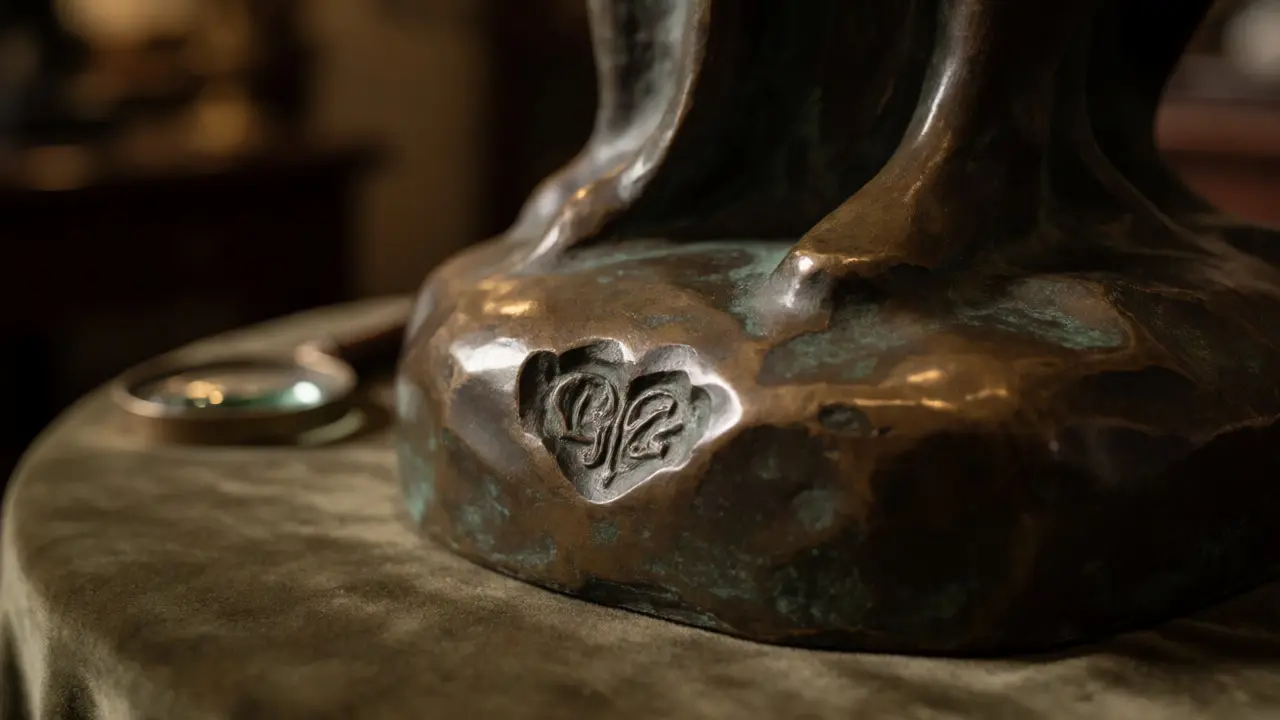
The foundry mark is the fingerprint of the manufacturer. It usually appears on the base or the underside of the sculpture. You’ll often see a combination of the founder’s name, a location, and sometimes a date code. But here is where things get tricky: many modern reproductions use molds taken from original casts, meaning the original foundry mark is still present, even though the new cast was made decades later.
So, how do you distinguish a vintage cast from a modern one using the same mark? Look at the quality of the stamping. Original marks from the late 19th and early 20th centuries were often hand-chased into the mold or stamped with significant force, resulting in crisp, deep impressions. Modern reproductions often show softer details or signs of mechanical pressing. Additionally, check the font style. Foundries changed their logo designs over the years. The Susse Frères mark, for example, evolved significantly between the 1920s and the 1950s. Comparing your mark against a verified reference chart is essential.
| Foundry Name | Active Period (Approx.) | Key Characteristics |
|---|---|---|
| Fonderie Barbedienne | 1834-1954 | Often includes 'Reduction Mécanique' text; high-quality finishes. |
| Fonderie Susse | 1904-Present | Mark often includes 'Paris'; associated with Rodin and Maillol. |
| Fonderie Rudier | 1874-1952 | Famous for Rodin casts; marks vary by generation (Alexis vs. Georges). |
| Fonderie Hébrard | 1880-1937 | Known for Degas bronzes; distinctive oval or rectangular stamps. |
Casting Methods: Lost Wax vs. Sand Casting
The technique used to create the sculpture leaves distinct physical traces. The most common method for fine art bronzes is lost-wax casting, also known as cire perdue. This process involves creating a wax model, coating it in ceramic shell, melting out the wax, and pouring in molten bronze. Because the mold is destroyed in the process, each cast is technically unique, though identical in design.
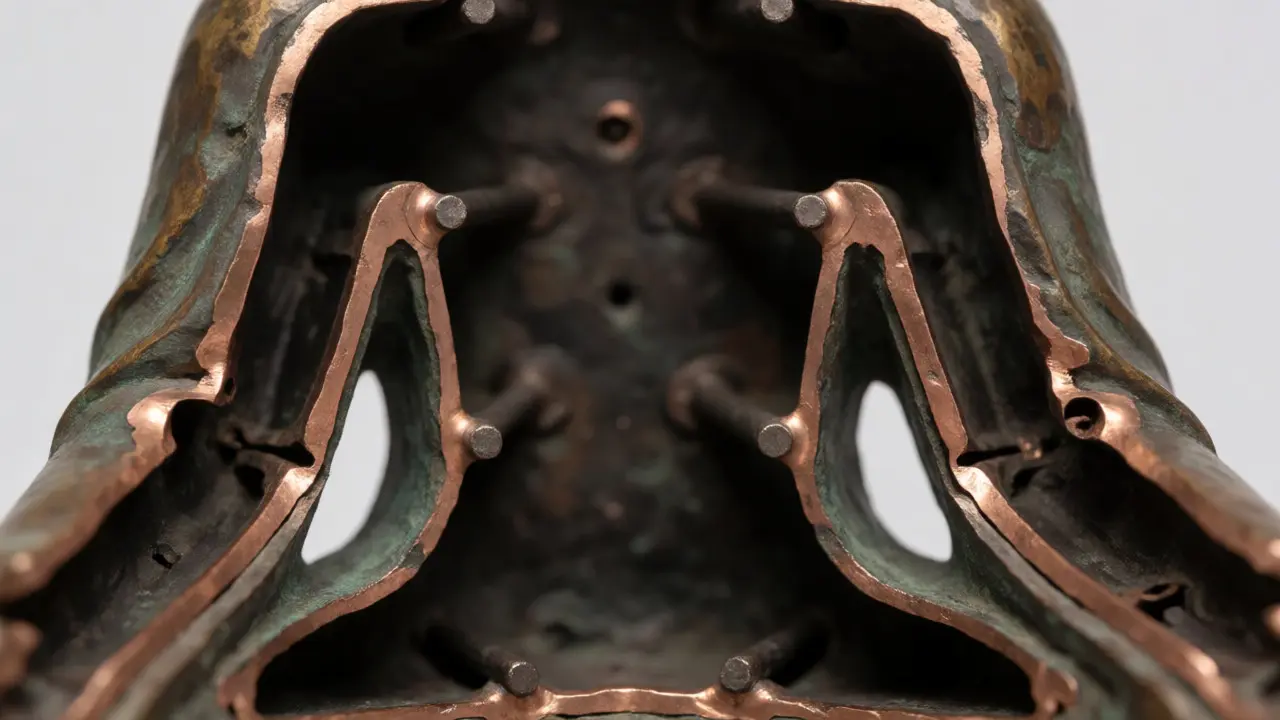
How does this help authentication? Look for seams and joints. Lost-wax casting often requires assembling separate pieces (arms, legs, head) which are welded together. On older, authentic pieces, these weld lines were meticulously chased away-smoothed and blended by hand-so they are barely visible. On cheaper reproductions, you might see rough grinding marks or visible seams where the welding wasn't finished properly. Furthermore, lost-wax casts often have small pins or dowels inside to hold sections together during assembly. X-raying a sculpture can reveal these internal structures, which are consistent with period techniques.
In contrast, sand casting uses reusable molds made of sand and clay. This method is faster and cheaper, typically used for decorative objects rather than fine art. Sand-cast pieces often have a grainier surface texture due to the sand particles imprinting on the metal. If a piece claims to be a high-end gallery bronze but has a sandy, porous surface finish, it was likely mass-produced using sand casting, which lowers its value significantly.
Analyzing Patina and Surface Finish
Patina is the color and texture of the bronze surface, created by chemical treatment or natural oxidation. Authenticating patina is controversial because it can be applied artificially. However, there are tells. Natural patina develops slowly over decades, penetrating the metal. Artificial patina sits on top.
Scratch the bottom of the base gently with a fingernail or a soft tool. If the color comes off easily or reveals bright yellow brass underneath immediately, the patina is likely fresh paint or a thin chemical wash. Genuine antique bronze will have a deeper, more complex coloration that resists scraping. Also, look for wear patterns. An authentic piece handled over generations will show wear on high points-the nose, hands, or edges of clothing-where the skin oils and friction have polished the metal to a shine. Reproductions often have uniform wear or no wear at all, looking too "perfect" for their age.
Another key indicator is the presence of verdigris, the green corrosion product of copper alloys. While verdigris can be faked, natural buildup tends to occur in crevices and recesses where moisture collects. If you see bright green powder on raised surfaces, it might be a sign of poor storage conditions or artificial aging. Be cautious: some dealers apply a clear lacquer to protect the patina. While this preserves the look, it can obscure underlying flaws and may lower the value if the collector prefers the raw, untreated surface.
Weight, Alloy Composition, and Internal Structure
Bronze is an alloy of copper and tin, sometimes with small amounts of zinc or lead. The ratio affects the weight and sound of the sculpture. Traditional fine-art bronze contains about 88-90% copper and 10-12% tin. This composition gives it a specific density and a resonant ring when tapped lightly. Cheaper reproductions might use spelter (zinc-based alloy) or hollow resin filled with concrete. Spelter is lighter and brittle, whereas resin sounds dull and thuds when struck.
Hold the piece. Does it feel surprisingly light for its size? That’s a red flag. Real bronze is heavy. If you have access to a scale, weigh it and compare it to similar documented examples. Discrepancies of more than 10-15% could indicate a different material or a hollow core. For larger sculptures, check the base. Many antiques have a hollow base covered with a plate, secured with screws or solder. Older pieces often use hand-cut screws or lead solder, while modern ones use machine-made Phillips-head screws and electric arc welding. Inspecting the fasteners can instantly date the assembly.
Provenance and Documentation
Physical evidence is crucial, but paper trails matter too. Provenance refers to the history of ownership. Ideally, you want a chain of custody linking the piece back to the artist or the original buyer. Auction catalogs, exhibition labels, and invoices from reputable galleries serve as strong proof.
Be wary of vague provenance stories like "it was in my grandfather's attic." Without documentation, this is just a claim. Look for inventory numbers written on the base. Museums and major collectors often marked their acquisitions with ink or etching. Cross-reference these numbers with museum databases if possible. Also, check for copyright marks. Some artists, like Auguste Rodin, had strict controls over casting rights. Posthumous casts authorized by the museum or foundation will carry specific numbering (e.g., 1/6). Unauthorized casts might lack these numbers or have inconsistent numbering sequences.
Common Pitfalls and Red Flags
Even experienced buyers get fooled. Here are the most common traps:
- The "Too Perfect" Problem: If a 100-year-old statue looks brand new, it probably is. Age shows.
- Mismatched Styles: Ensure the foundry actually worked with the artist. Did Barbedienne really cast works by this obscure American sculptor? Check historical records.
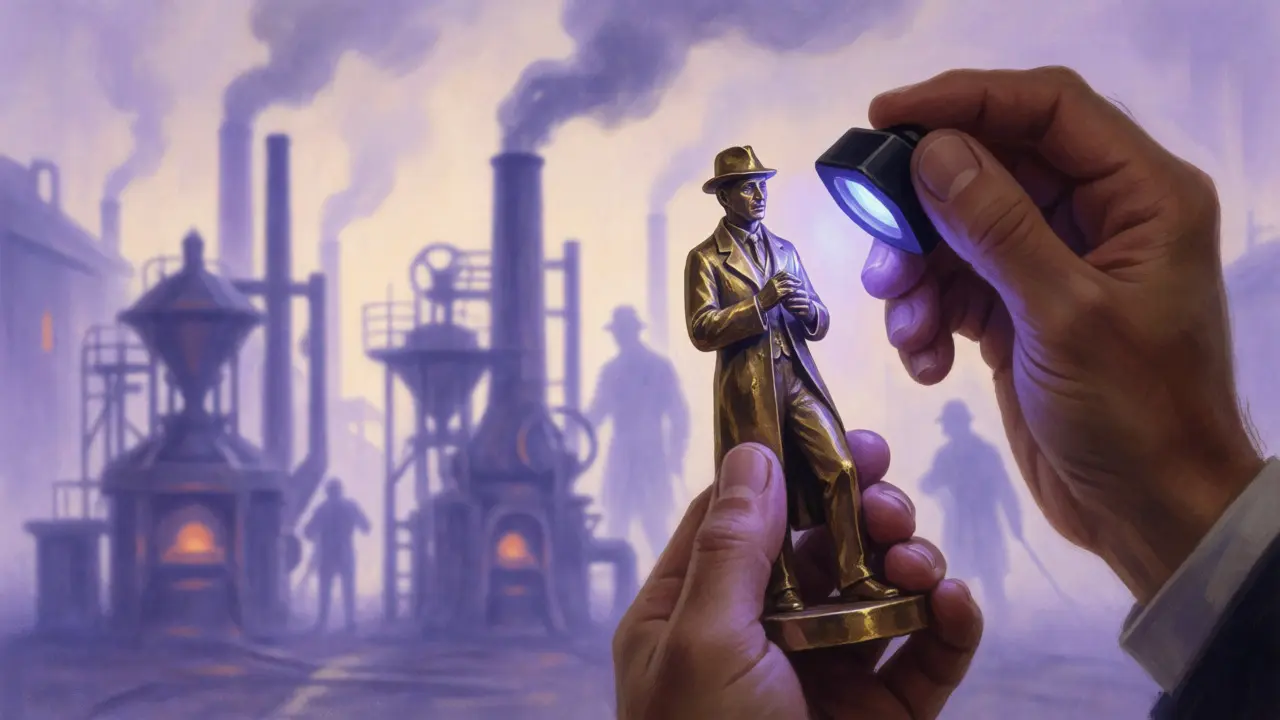
- Repaired Damage: Hidden cracks or repairs can drastically reduce value. Use a blacklight (UV light) to inspect the surface. Old repairs and fillers often fluoresce differently than the original bronze.
- Inconsistent Signatures: The artist’s signature should match known examples in style and placement. If the signature looks painted on rather than cast in relief, walk away.
Authentication isn't a single-step process; it's a convergence of evidence. No single factor proves authenticity on its own. But when the foundry mark, casting method, patina, weight, and provenance all align, you can be confident you're investing in a genuine piece of art history.
What is the difference between a cast and a reproduction?
A cast is produced from the original mold or master model during the artist's lifetime or shortly after, under official supervision. A reproduction is a copy made later, often without the artist's involvement, sometimes using molds taken from existing casts. Reproductions generally have lower market value.
Can I clean the patina myself?
Generally, no. Improper cleaning can strip the valuable patina and permanently damage the sculpture's appearance and value. Dust gently with a soft brush, but leave chemical cleaning or polishing to professional conservators.
Why do some bronzes have numbers on them?
Numbers indicate the edition size. For example, '1/6' means this is the first of six total casts made from that model. Limited editions are more valuable. Unnumbered pieces may be open-ended editions or unauthorized copies.
Is a heavier sculpture always better?
Not necessarily, but weight indicates solid construction. Solid bronze is heavy. Hollow bronze is lighter but still authentic if designed that way. Resin-filled or spelter pieces are often too light or feel wrong. Weight helps rule out fake materials.
How do I verify a foundry mark?
Compare the mark's font, shape, and position against authoritative references like Beraldi's 'Les Graveurs du XIXe Siècle' or online databases from auction houses like Sotheby's or Christie's. Pay attention to the date range of the foundry's operation.