Artist Statement Guide: What, How, and Why
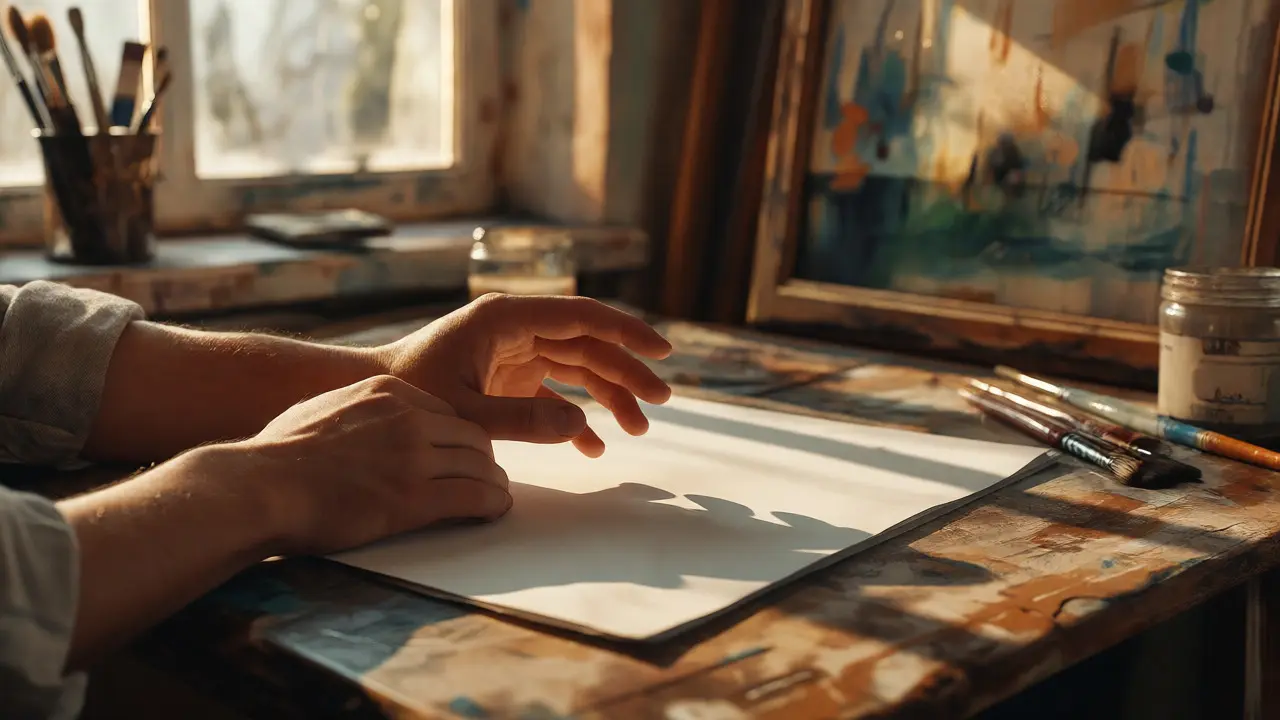
You just finished a series of paintings that took six months. You frame them, take photos, and update your website. Then you hit the wall: What to Include in an Artist Statement. It’s blank. Or worse, it’s full of jargon like "juxtaposition of liminal spaces" that makes your own work sound unrecognizable. Here is the truth: galleries, grant committees, and collectors don’t read your statement to learn what the painting looks like. They can see that. They read it to understand why it matters to you.
An Artist Statement is a brief written description of the artist's work, used for exhibition proposals, grant applications, and portfolios. It bridges the gap between your visual output and the viewer’s interpretation. If you leave it out, you’re letting strangers guess your intent. Often, they guess wrong. This guide breaks down the three core pillars every effective statement needs: the What, the How, and the Why. No fluff, no pretension-just the structure that gets your work taken seriously.
The Core Framework: What, How, Why
Most bad statements fail because they skip straight to the philosophy (the Why) without grounding it in reality (the What). Think of your statement as a pyramid. The base is concrete facts. The middle is process. The peak is meaning. If you build from the top down, it collapses under scrutiny. Start with the base.
The What answers: What are you making? Be specific. Don’t say "I explore identity." Say "I create mixed-media collages using vintage family photographs and digital glitch art to examine intergenerational trauma." See the difference? One is vague; the other gives the reader a mental image and a material context. Specificity builds trust. It shows you know your craft.
The How answers: How do you make it? This isn’t a technical manual, but it should hint at your method. Do you paint en plein air? Do you use generative algorithms? Do you source materials from thrift stores? Mentioning your process adds texture. It tells the curator that this isn’t AI-generated or mass-produced. It connects the physical object to your hands and decisions.
The Why answers: Why does this exist? This is where your motivation lives. Are you responding to climate change? Challenging traditional portraiture? Processing personal grief? Keep this section short-one or two sentences max. If you ramble here, you lose the reader. The goal is to give them an emotional or intellectual hook, not a thesis defense.
Structuring Your Statement for Different Audiences
One size rarely fits all. A statement for a MFA application differs from one for a local coffee shop exhibit. However, the core components remain similar. The length and tone shift based on who is reading.
| Audience | Focus Area | Tone | Length |
|---|---|---|---|
| Galleries & Curators | Marketability & Conceptual Consistency | Professional, Concise | 150-300 words |
| Grant Committees | Impact & Feasibility | Persuasive, Clear | 300-500 words |
| General Public / Website | Accessibility & Story | Warm, Inviting | 100-200 words |
| Academic Applications | Theoretical Context & Methodology | Analytical, Rigorous | 500+ words |
For galleries, curators scan quickly. They want to know if your work fits their program. Use industry-standard terms but avoid buzzwords that mean nothing. For grants, you need to prove you have a plan. Connect your "How" to your timeline. For the public, drop the academic mask. Talk like a human inviting them into your studio.
Writing the "What": Concrete Details Matter
When describing your work, resist the urge to be abstract. Abstract language hides weak concepts. Instead, anchor your description in tangible elements. Mention the medium explicitly. Is it oil on linen? Bronze casting? Video installation?
Consider the entity of Medium is the material or technique used by an artist to create a work of art. In your statement, link the medium to the message. If you use charcoal, mention its fragility or its historical weight. If you use neon, discuss its commercial associations. This creates a semantic link between form and content.
- Bad: "My work explores light and space."
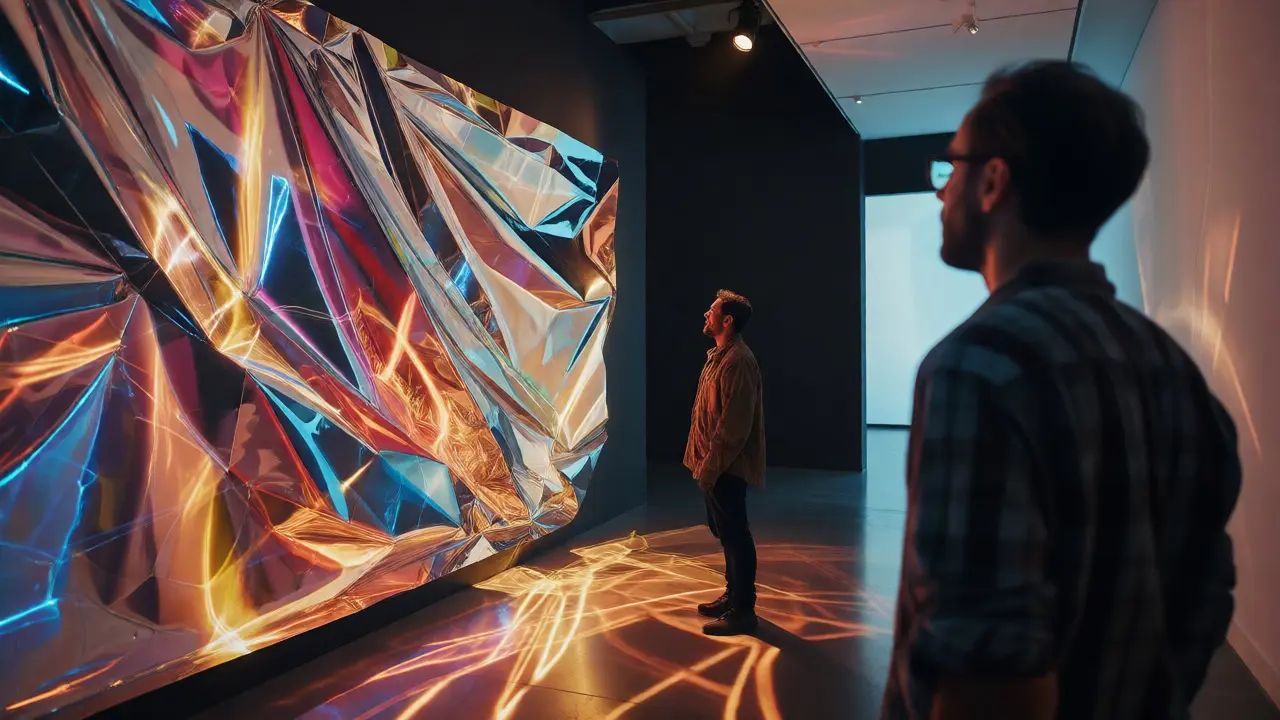
- Good: "I construct immersive environments using reflective mylar and projected light to distort spatial perception."
Notice how the second example names the tools (mylar, projection) and the effect (distortion). It gives the reader something to visualize. Always ask yourself: Could someone draw this from my sentence? If not, add more detail.

Navigating the "How": Process Without Boredom
Your process reveals your discipline. But don’t turn it into a recipe list. "First I prime the canvas, then I sketch..." is boring. Instead, highlight decision points. Why did you choose this brush over that one? Why did you stop adding layers when you did?
Mentioning Technique is the manner in which an artist applies their skills and materials to create a piece helps establish expertise. For example, if you practice encaustic painting, note the heating process and its risks. This signals risk-taking and skill. If you use digital tools, clarify your role versus the software’s role. Did you code the algorithm, or did you tweak presets? Honesty here prevents accusations of lack of effort later.
Keep this section active. Use verbs. "I layer," "I carve," "I assemble." Passive voice kills momentum. "The clay was shaped" sounds distant. "I shape the clay" sounds engaged.
Clarifying the "Why": Purpose and Context
This is the hardest part for most artists. We often feel our work speaks for itself. But context changes reception. Your "Why" provides the lens through which viewers interpret your choices.
Connect your personal motivation to broader themes. If you paint landscapes, are you commenting on urbanization? If you sculpt figures, are you exploring gender norms? Linking personal impulse to universal questions makes your work relatable.
Avoid clichés like "I’ve been drawing since I was five." Everyone has. Instead, focus on the current drive. What problem are you trying to solve right now? What question keeps you up at night? That urgency translates into compelling text.
Remember, the Concept is the underlying idea or theme that drives the creation of an artwork. Your statement should articulate this concept clearly. If you can’t explain it simply, you might not understand it yet. Go back to the drawing board-or the canvas-and refine your thinking before you write.
Common Pitfalls to Avoid
Even experienced artists fall into traps. Here are the big ones.
Jargon Overload: Using words like "liminal," "dialectic," or "post-structuralist" without defining them alienates readers. If you must use specialized terms, ensure they serve clarity, not status. If you remove the word and the sentence still works, cut it.
Self-Praise: Avoid adjectives like "groundbreaking," "innovative," or "masterful." Let the work earn those labels. Your job is to describe, not to judge. Save self-assessment for interviews.
Over-Explanation: Don’t tell us what we can see. "This blue square represents sadness" is redundant if the square is obviously sad. Trust the viewer. Provide the framework, not the answer key.
Inconsistency: Ensure your statement matches your portfolio. If your statement discusses environmentalism but your images show portraits of cats, you confuse the reader. Alignment builds credibility.
Editing Checklist Before Submission
Before you hit send, run through this quick audit. It takes ten minutes but saves weeks of rejection.
- Word Count Check: Does it fit the limit? Most calls for entry specify 150-300 words. Respect it.
- Read Aloud Test: Listen to it. Where do you stumble? Those spots need rewriting.
- Third-Party Review: Ask a non-artist friend to read it. Can they summarize your work in one sentence after reading? If not, simplify.
- Tone Match: Is it confident but humble? Arrogant or passive?
- Grammar and Spelling: Typos signal carelessness. Proofread twice.
Writing an artist statement is iterative. Your first draft will be stiff. Your fifth will flow. Keep refining as your work evolves. An outdated statement hurts more than no statement at all. Update yours every time you complete a significant body of work.
How long should an artist statement be?
Typically, between 150 and 300 words. For grant applications, it may extend to 500 words. Always check the specific guidelines of the organization requesting it. Brevity forces clarity.
Should I write in the first person?
Yes. Use "I" statements. "I create," "I explore," "I use." It makes the connection between the artist and the work direct and personal. Third-person can feel detached and pretentious.
Do I need to include my biography?
No, keep them separate. The artist statement focuses on the work and its intent. The biography covers your education, exhibitions, and awards. Mixing them dilutes both messages.
Can I use the same statement for all submissions?
You can use a master version, but tailor it slightly for each opportunity. Highlight aspects relevant to the specific gallery’s mission or the grant’s focus area. Customization shows you’ve done your homework.
What if my work is abstract?
Describe the sensory experience or the conceptual trigger. Since there are no literal objects to point to, focus on color, texture, scale, and the emotions or ideas evoking the composition. Explain the rules you followed in creating the abstraction.