Artist Representation and Career Stage: How to Pick Winners
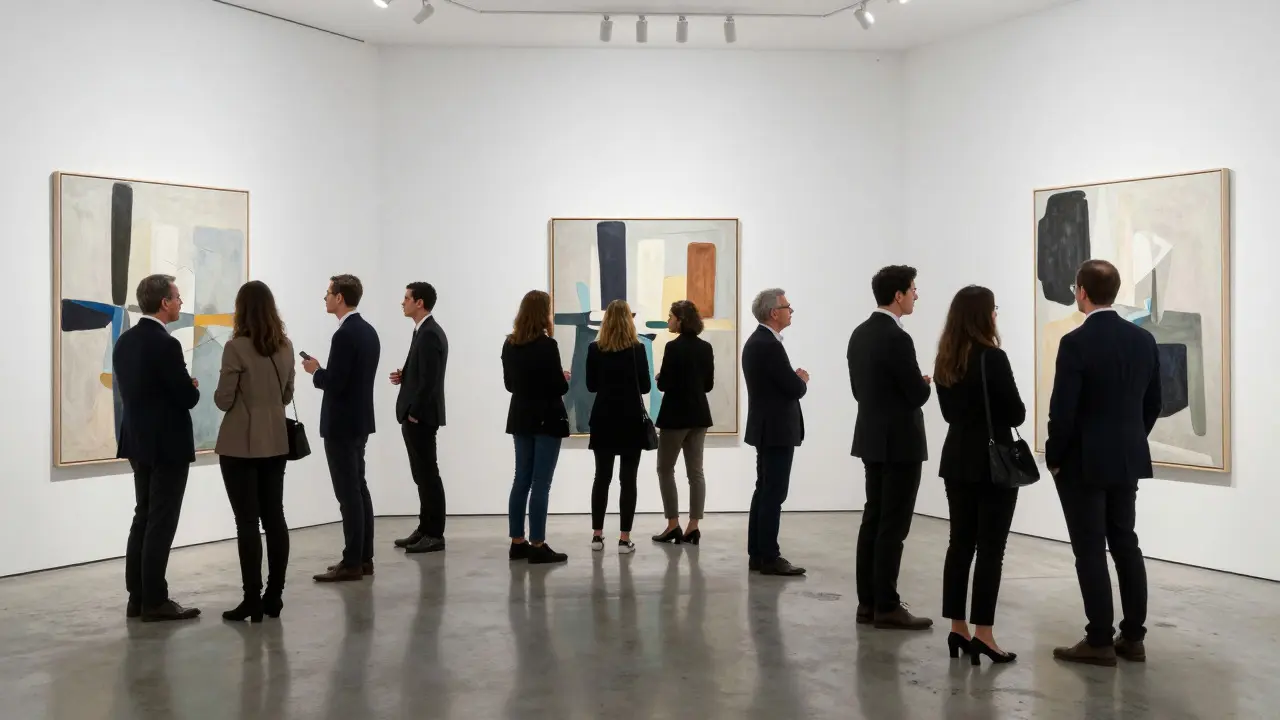
Walking into a gallery in Portland or New York, you see the same faces. The "it" artists. The ones whose prices just doubled. But how did they get there? It wasn't luck. It was artist representation meeting the right moment in their career stage. For collectors, understanding this intersection is the difference between buying a masterpiece and buying a speculative bet.
You don't need to be a critic to spot potential. You need to read the room. The relationship between an artist and their gallery is a proxy for market confidence. When that alignment hits during a specific phase of the artist's life, the odds shift dramatically in your favor. This isn't about guessing; it's about recognizing patterns that have played out for decades in the global art market.
The Anatomy of Artist Representation
Artist representation is the professional partnership between a creative and a commercial entity that manages sales, exhibitions, and public relations. It sounds simple, but the quality of this bond dictates everything. A strong representation agreement means the gallery has exclusive rights to sell the work, which creates scarcity. Scarcity drives price.
However, not all galleries are created equal. There is a distinct hierarchy:
- Blue-Chip Galleries: Think Gagosian, Hauser & Wirth, or Pace. They deal with established names. Their curation is rigorous, but entry barriers are high.
- Mid-Tier Galleries: These are the growth engines. Galleries like David Zwirner (in its earlier days) or local powerhouses in cities like Los Angeles or Berlin. They take risks on artists who have proven themselves locally but haven't hit the international mainstream yet.
- Emerging Galleries: Often run by former dealers or curators. They are hungry, agile, and willing to champion unknowns. This is where the highest risk/reward ratio exists.
The key attribute here is exclusivity duration. A five-year exclusive contract signals long-term commitment. A one-year non-exclusive deal suggests the gallery is testing the waters. As a collector, look for the former when you want stability, and the latter if you are hunting for raw, unpriced talent.
Mapping the Four Career Stages
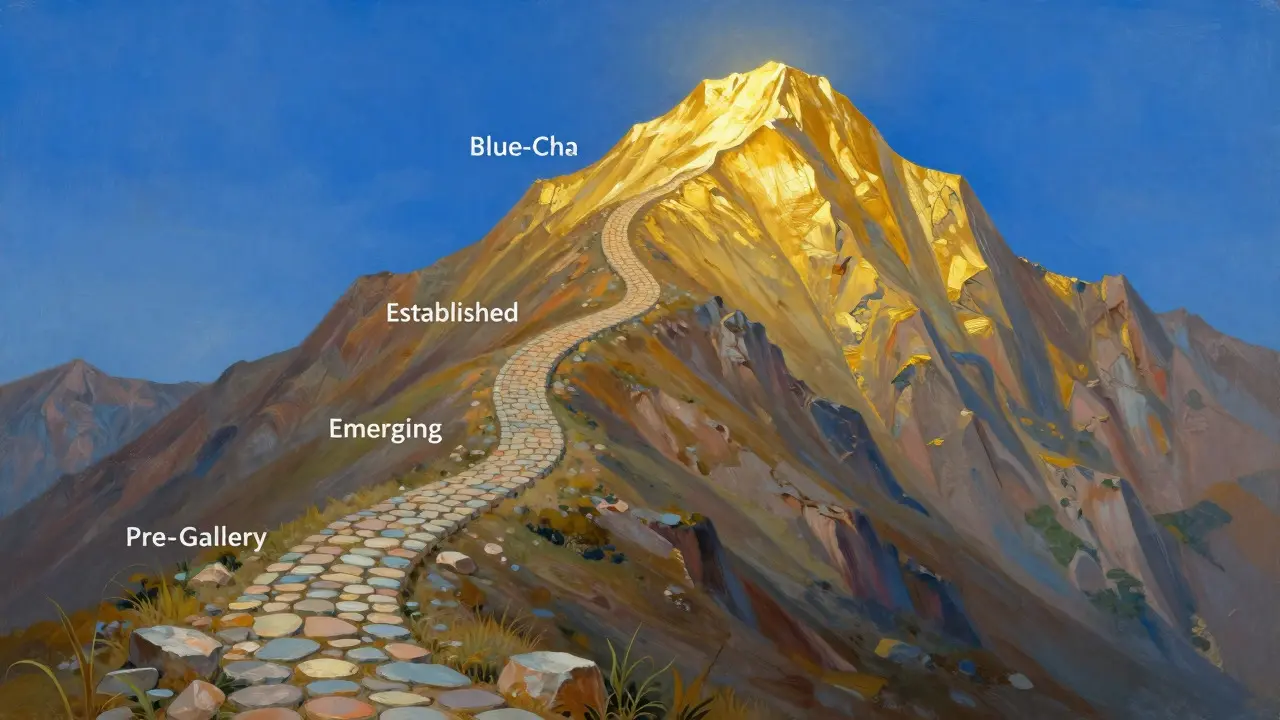
Every artist’s trajectory follows a predictable arc, even if the speed varies. Identifying where an artist sits on this curve is your primary tool for valuation. We can break this down into four distinct phases:
- The Pre-Gallery Phase: The artist is working independently. No representation. Prices are low, often under $5,000. Risk is extreme because there is no institutional validation. However, if you buy here, you are at the bottom of the curve.
- The Emerging Phase: The artist secures their first reputable gallery show. They start appearing in small group exhibitions. Prices range from $5,000 to $25,000. This is the "sweet spot" for many serious collectors. The market is beginning to notice, but the hype hasn't peaked.
- The Established Phase: The artist has solo shows at major galleries. Museum acquisitions begin. Prices stabilize and rise steadily ($25,000 to $100,000+). The risk drops, but so does the percentage gain relative to the initial purchase price.
- The Blue-Chip Phase: The artist is a household name in the art world. Auction records are set. Prices are six figures. This is where capital preservation matters more than capital appreciation.
The critical insight? Most people wait until the Established Phase to buy, missing the exponential growth of the Emerging Phase. Others try to buy in the Pre-Gallery Phase without any guidance, resulting in total loss. The goal is to enter during the transition from Pre-Gallery to Emerging, or early in the Emerging stage itself.
Why Timing Matters More Than Talent
Talent is subjective. Market timing is objective. An artist with moderate talent represented by a top-tier gallery during a boom cycle will outperform a genius represented by a struggling gallery during a recession. Why? Because representation provides liquidity. If you own a work by an artist with strong representation, you can resell it easily. If you own a work by an unrepresented artist, finding a buyer takes years, if ever.
Consider the concept of market velocity. This refers to how quickly works change hands. High-velocity artists have active secondary markets. Low-velocity artists do not. When picking winners, prioritize artists whose recent works have sold within three months of release. This indicates demand exceeds supply, a fundamental driver of price increases.
Red Flags in Representation Deals
Not every shiny new gallery deal is a good sign. Here are the pitfalls that trip up even experienced collectors:
- The "Hype Factory": Galleries that use aggressive social media marketing to create artificial buzz. Look for real-world attendance at openings versus Instagram likes. If the crowd is mostly other dealers and no actual collectors, be cautious.
- Frequent Gallery Hopping: If an artist changes representatives every two years, it signals instability. The gallery didn't believe in them enough to stick around. Consistency is king.
- Overproduction: If an emerging artist releases 50 works a year, the market gets saturated. Limited editions or small series (5-10 pieces) maintain exclusivity and value better.
Conversely, green flags include galleries that publish annual catalogues raisonnés, invite respected critics to openings, and secure museum loans for the artist's work. These actions build institutional memory, which is the bedrock of long-term value.
How to Evaluate a Potential Winner
So, how do you apply this? Use a simple decision framework before you make an offer. Ask yourself these questions:
| Criterion | High Potential Signal | Low Potential Signal |
|---|---|---|
| Representation Duration | 3+ years with current gallery | Less than 1 year or frequent changes |
| Sales Velocity | Works sell within 90 days | Works sit unsold for 6+ months |
| Museum Interest | Recent acquisition or loan | No institutional presence |
| Price Trajectory | Steady 10-20% annual increase | Flat or erratic pricing |
| Critical Reception | Reviews in major publications | Only niche blog coverage |
If an artist checks three or more boxes in the "High Potential" column, you are looking at a winner. If they check multiple boxes in the "Low Potential" column, walk away, no matter how much you love the visual style.
Common Mistakes Collectors Make
Even with the right framework, human emotion interferes. The most common mistake is falling in love with the *idea* of the artist rather than the *data* behind them. You see a painting that moves you, and you buy it. That's fine for personal enjoyment. But if you view it as an asset, you must detach.
Another error is ignoring the regional context. An artist thriving in Seoul might struggle in London due to different aesthetic preferences and market structures. Always consider where the artist's core audience resides. If you are based in the US, focus on artists with strong North American representation. Cross-border representation adds complexity and friction to resale.
FAQ
What is the best career stage to buy art?
The Emerging Phase offers the best balance of risk and reward. At this stage, the artist has secured reputable representation and shown consistent growth, but prices have not yet reached peak levels. Buying here allows for significant appreciation as the artist moves into the Established Phase.
Does gallery reputation matter more than the artist's skill?
In the short term, yes. A top-tier gallery can elevate a mid-tier artist's market value through exposure and credibility. However, in the long term, the artist's body of work and critical reception determine sustainability. A great gallery cannot save a weak portfolio indefinitely.
How do I verify if an artist has exclusive representation?
Ask the gallery directly for a copy of the representation agreement or confirm the exclusivity terms in writing. Reputable galleries will be transparent about this. Additionally, check if the artist sells through other channels simultaneously; if they do, the representation may be non-exclusive.
Is it too late to invest in already famous artists?
It depends on your goals. If you seek high percentage returns, blue-chip artists offer lower growth rates compared to emerging talent. However, they provide capital preservation and liquidity. For pure investment growth, focus on the Emerging Phase. For portfolio stability, mix in Established Phase artists.
What role do museums play in an artist's career stage?
Museum acquisitions signal institutional validation. When a museum buys a work, it certifies the artist's historical importance. This often triggers a price jump in the secondary market. Monitor museum press releases and exhibition announcements as leading indicators of an artist moving from Emerging to Established status.