Artist-Only Art Fairs: The Direct-to-Collector Revolution

Imagine walking through a bustling gallery space, drawn to a painting that stops you in your tracks. You love it. You want it. But instead of talking to the artist who poured their soul into those brushstrokes, you’re handed a business card for a gallery owner and quoted a price inflated by 50% or more. For decades, this has been the standard script of the art world. But something is shifting under our feet. A new breed of event is rising-one where the middleman doesn’t just step aside; they don’t exist at all.
We are witnessing the rapid expansion of artist-only art fairs, events built on a radical premise: direct interaction between creators and collectors without gallery representation. These aren't just pop-up markets with better lighting. They are structured, curated ecosystems designed to dismantle the traditional gatekeeping of the art market. If you are an artist tired of splitting revenue down the middle, or a collector frustrated by opaque pricing and distant relationships, this model isn't just an alternative-it’s becoming the future.
The Anatomy of the Direct-to-Collector Model
To understand why these fairs are gaining traction, we have to look at how they actually work. In a traditional art fair like Frieze or Art Basel, galleries rent booths. The gallery owns the inventory relationship. The artist is often invisible to the buyer. In contrast, an artist-only fair operates on a flat-fee structure. Artists pay a booth fee-typically ranging from $300 to $800 depending on the fair's prestige-and keep 100% of their sales.
This shift changes the entire dynamic of the transaction. When you buy directly from the artist, you aren't just purchasing an object; you're buying access to the creator's intent. You can ask about the technique, the materials, and the story behind the piece while standing right next to it. This transparency builds trust, which is the currency of high-value collecting. The barrier to entry for artists drops significantly, allowing emerging talent to compete alongside established names based purely on the strength of their work, not their connections.
| Feature | Traditional Gallery Fair | Artist-Only Fair |
|---|---|---|
| Commission Rate | 40-60% to Gallery | 0% (Artist keeps 100%) |
| Booth Cost | $5,000 - $50,000+ | $300 - $800 |
| Buyer Interaction | Mediated by Dealer | Direct with Artist |
| Curatorial Focus | Gallery Reputation | Individual Artistic Merit |
| Pricing Transparency | Opaque (Markups common) | Transparent (Set by Artist) |
Why Collectors Are Making the Switch
You might think collectors prefer the prestige of a blue-chip gallery. Surprisingly, many do not. The modern collector, particularly those entering the market in the 2020s, values authenticity and connection over institutional validation. They want to know that their money supports the person who made the art, not the overhead of a Manhattan showroom.
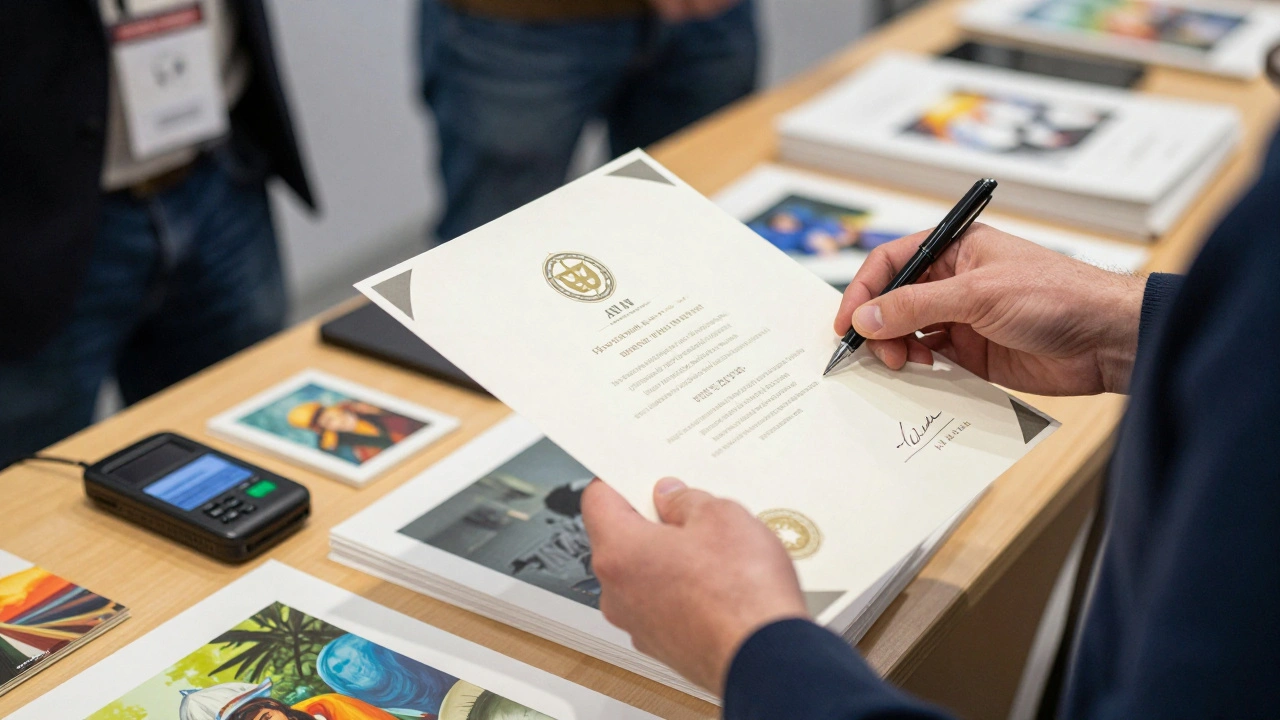
There is also the issue of pricing fairness. In the traditional model, a gallery might sell a piece for $1,000 but only give the artist $400. At an artist-only fair, if the artist sets the price at $600, the collector saves money, and the artist earns more. It’s a win-win that feels ethical. Collectors report feeling more confident in their purchases because they can verify the provenance immediately. There’s no waiting weeks for a certificate of authenticity to arrive via mail; it’s signed and handed to you on the spot.
Furthermore, these fairs often feature a wider diversity of styles and voices. Traditional galleries tend to stick to safe, commercially viable trends to protect their investment. Artist-only fairs, especially those with rigorous curatorial committees, take risks on experimental, niche, or unconventional work that dealers might shy away from. This gives collectors the chance to discover unique pieces before they hit the mainstream radar.

How Artists Benefit Beyond the Sale
For artists, the financial upside is obvious, but the professional growth is even more significant. Participating in these fairs forces artists to develop crucial soft skills: negotiation, personal branding, and customer service. You learn how to talk about your work without sounding pretentious. You learn how to read a room and gauge interest.
Networking becomes organic. Instead of shaking hands with other dealers who view you as competition, you connect with peers. These relationships often lead to collaborations, shared studio spaces, or cross-promotion on social media. I’ve seen artists form lasting friendships at these events that last longer than any gallery contract ever could.
Additionally, the data you collect is invaluable. You get email addresses and phone numbers directly from buyers. This allows you to build your own mailing list-a marketing asset that no gallery will ever share with you. In an era where algorithms control visibility, owning your audience is power. An artist who sells ten pieces at a fair and captures ten emails has created a pipeline for future sales that can sustain them for years.
Curating Quality Without Gatekeepers
A common criticism of direct-to-consumer models is that quality suffers without professional vetting. "If anyone can apply, won't it become a flea market?" This is a valid concern, and the best artist-only fairs address it head-on through strict curation. Events like The Armory Show's independent sections or regional equivalents like Portland Art Fair utilize blind review processes. Committees of curators, critics, and senior artists review portfolios without knowing the applicant's reputation or gallery representation.
This meritocratic approach ensures that the visual standard remains high. It filters out hobbyists who haven't developed a cohesive body of work. The result is a fair that feels prestigious and professional, yet accessible. The key for attendees is to research the fair's selection criteria beforehand. Look for fairs that publish their jury members or explain their acceptance rate. If a fair accepts 90% of applicants, it likely lacks the rigor needed to attract serious collectors.
Practical Tips for Navigating Artist-Only Fairs
Whether you are selling or buying, preparation is everything. Here is how to make the most of these events:
- For Artists: Invest in professional photography of your work for your application. Your portfolio should tell a narrative. Bring multiple formats-prints, small originals, and statement cards. Ensure your payment processing is seamless; carry a mobile card reader. Have a clear pricing strategy written down so you don't negotiate nervously in the moment.
- For Collectors: Arrive early. The best pieces often go within the first few hours. Bring cash for smaller works, though most artists accept digital payments now. Ask questions. Don't be afraid to ask about the medium, the edition size (for prints), or the inspiration. A good artist loves to discuss their process.
- For Both: Dress appropriately. These are still professional environments. Treat the interaction with respect. For artists, this means being present and engaged, not hiding behind your laptop. For collectors, it means listening actively rather than dictating terms.
The Future of Art Distribution
The rise of artist-only fairs signals a broader decentralization of the art market. We are seeing similar trends in music with Bandcamp, in publishing with self-publishing platforms, and in film with streaming services. The technology exists to allow creators to reach audiences directly. The question is no longer whether it’s possible, but whether institutions will adapt.
Galleries are beginning to notice. Some are starting to offer "direct-to-collector" days or hybrid models where they host open studios. However, the pure artist-only fair remains the most effective tool for breaking the cycle of dependency. As more artists achieve financial independence through these channels, the leverage shifts back to the creator. This democratization doesn't mean the end of galleries, but it does mean they must earn their place by providing genuine value beyond simple distribution.
For the rest of us, it means a richer, more vibrant art ecosystem. It means discovering talent in local communities rather than only in global hubs. It means supporting the people who make beauty, not just the people who sell it. The next time you see a call for applications for an artist-only fair, consider it an invitation to participate in this shift. Whether you bring a canvas or a checkbook, you’re helping to rewrite the rules.
Are artist-only art fairs legitimate?
Yes, absolutely. While they lack the traditional gallery intermediary, reputable artist-only fairs employ rigorous curatorial processes to ensure high artistic standards. They operate legally as commercial events where artists sell their intellectual property directly to consumers. Many established artists use these fairs as a primary income source.
How much does it cost for an artist to participate?
Costs vary by location and prestige. Typically, booth fees range from $300 to $800 for a standard table or wall space. Larger venues may charge up to $1,500. Unlike traditional fairs, there are usually no commission fees on sales, meaning every dollar earned after the booth fee goes directly to the artist.
Can I negotiate prices at an artist-only fair?
You can, but it depends on the artist. Many set fixed prices to maintain consistency across different sales channels. However, some may offer slight discounts for bulk purchases (buying multiple pieces) or if you are buying directly from them versus a secondary market. Always ask politely rather than demanding a lower price.
Do these fairs accept credit cards?
Most professional artists at these fairs use mobile payment solutions like Square, Stripe, or PayPal Zettle. However, it is always wise to carry some cash, especially for smaller transactions or if technical issues arise. Cash is also appreciated by artists as it avoids processing fees.
Is the art at these fairs considered "professional"?
High-quality artist-only fairs are heavily curated. Only a small percentage of applicants are accepted, often less than 10%. The selected artists are typically working professionals with degrees, exhibition histories, or strong portfolios. The quality is comparable to mid-tier galleries, often with the added benefit of unique, undiscovered talent.