Art Criticism Pitfalls: Common Mistakes and Fallacies to Avoid
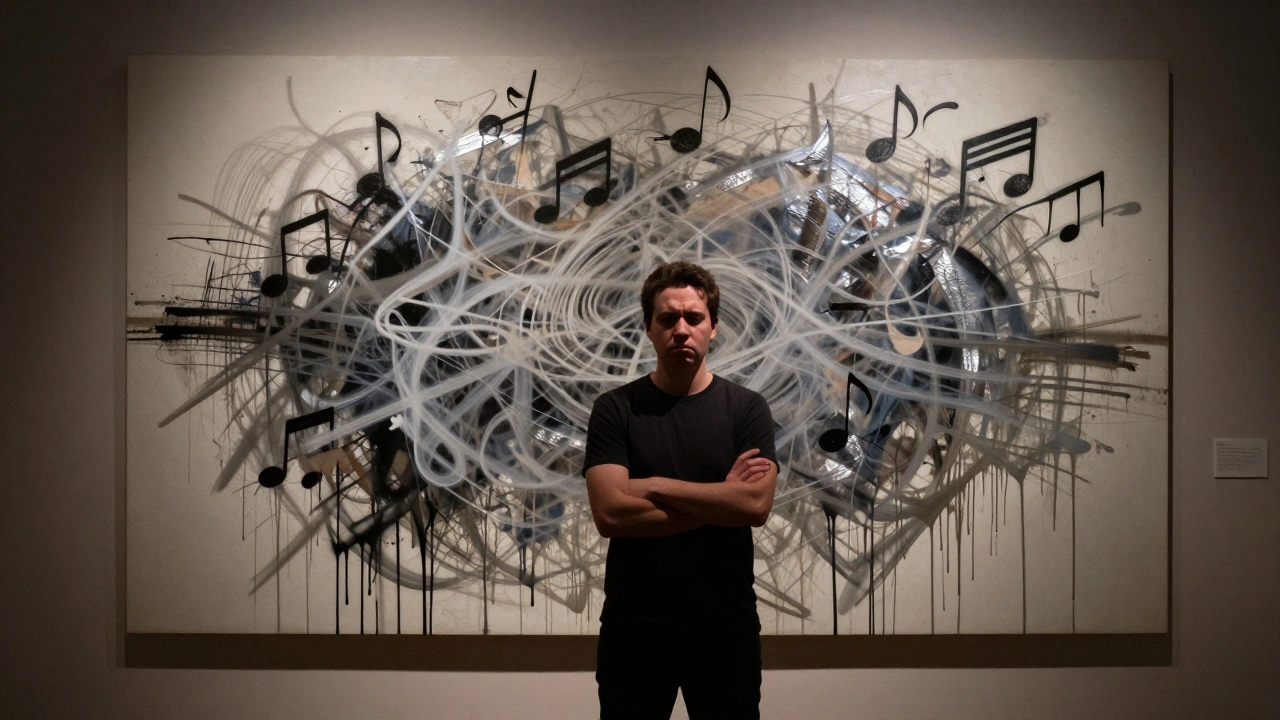
Art criticism isn’t about whether you like a painting or think a sculpture is weird. It’s about understanding why something moves you, challenges you, or even annoys you-and then being honest about the reasons. But too often, people fall into traps that turn thoughtful analysis into empty noise. These aren’t just minor slip-ups. They’re deep-seated mistakes that distort how we see art, and worse, they shape what gets valued in galleries, museums, and public conversations.
Confusing Personal Taste With Objective Judgment
"I don’t get it" is the most common phrase in art criticism. And it’s usually the start of a bad one. When someone says that, they’re not making a critique-they’re admitting they’re uncomfortable. Art doesn’t need to be understood the way a math equation is understood. It needs to be engaged with.
Take Jackson Pollock’s drip paintings. In the 1950s, critics dismissed them as "just splattered paint." But those who looked deeper noticed the rhythm, the physicality of the motion, the way the canvas captured energy, not just pigment. The mistake wasn’t in not liking it. The mistake was calling it meaningless because it didn’t match what they thought "real art" should look like.
There’s no universal rule for what makes art "good." But there is a difference between saying, "This doesn’t speak to me," and saying, "This fails to communicate intent, lacks formal coherence, or ignores its cultural context." The first is personal. The second is critical.
Letting Artist Reputation Override the Work Itself
It’s easy to get swept up in the myth. The tortured genius. The celebrity painter. The artist who got famous for one piece and spent the rest of their career repeating it. When you know who made something, it’s hard not to bring that baggage to the viewing.
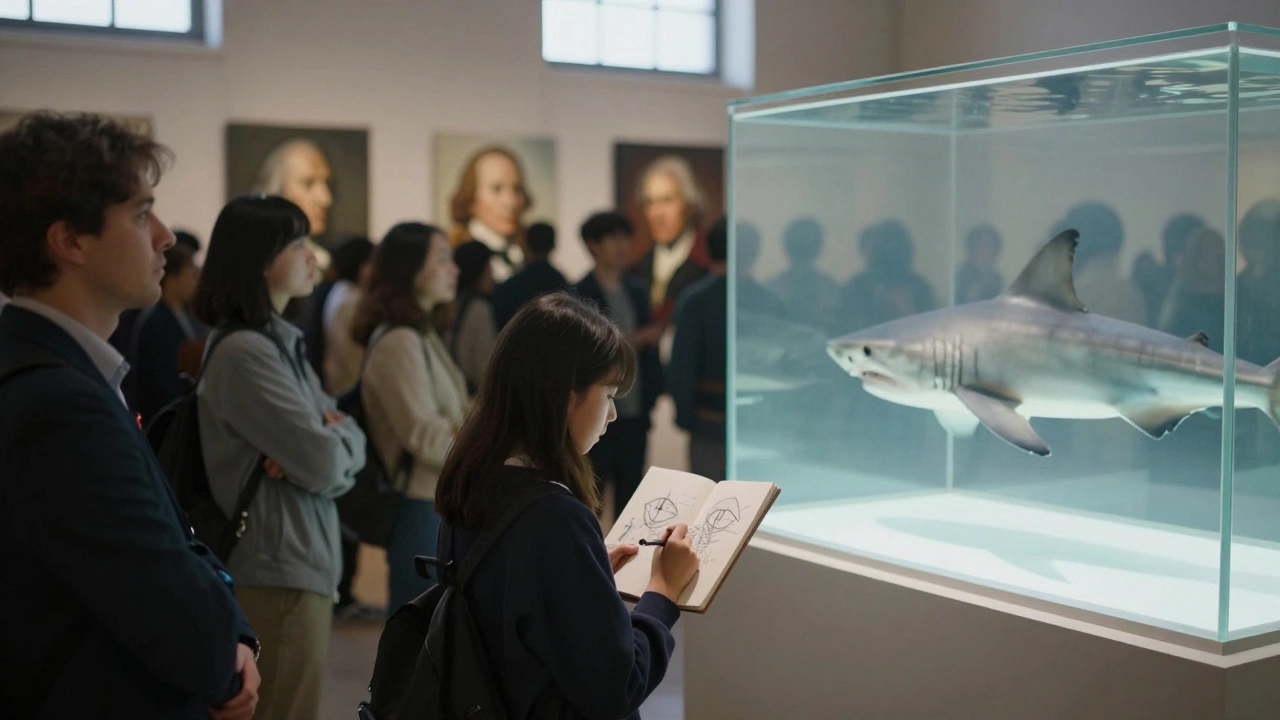
Think about Damien Hirst’s shark in formaldehyde. Some people treat it like a sacred relic because of his name. Others dismiss it outright because they think he’s a showman. But the work doesn’t change based on whether you think he’s brilliant or a fraud. The real question is: What does the piece do? How does it make you feel? What does it say about mortality, display, and value in modern society?
Art criticism should start with the object, not the biography. A painting by an unknown student in a community college show can be more powerful than a famous artist’s latest gallery piece. Don’t let the name on the label do the thinking for you.
Using Jargon to Hide Lack of Insight
"The chromatic dissonance in the postmodern deconstruction of the gaze reveals a hegemonic rupture in the ontological framework of the viewer."
If you’ve ever read something like that and felt impressed, you’ve been fooled. That’s not deep analysis. That’s a wall of words built to cover up the fact that the writer doesn’t actually know what they’re talking about.
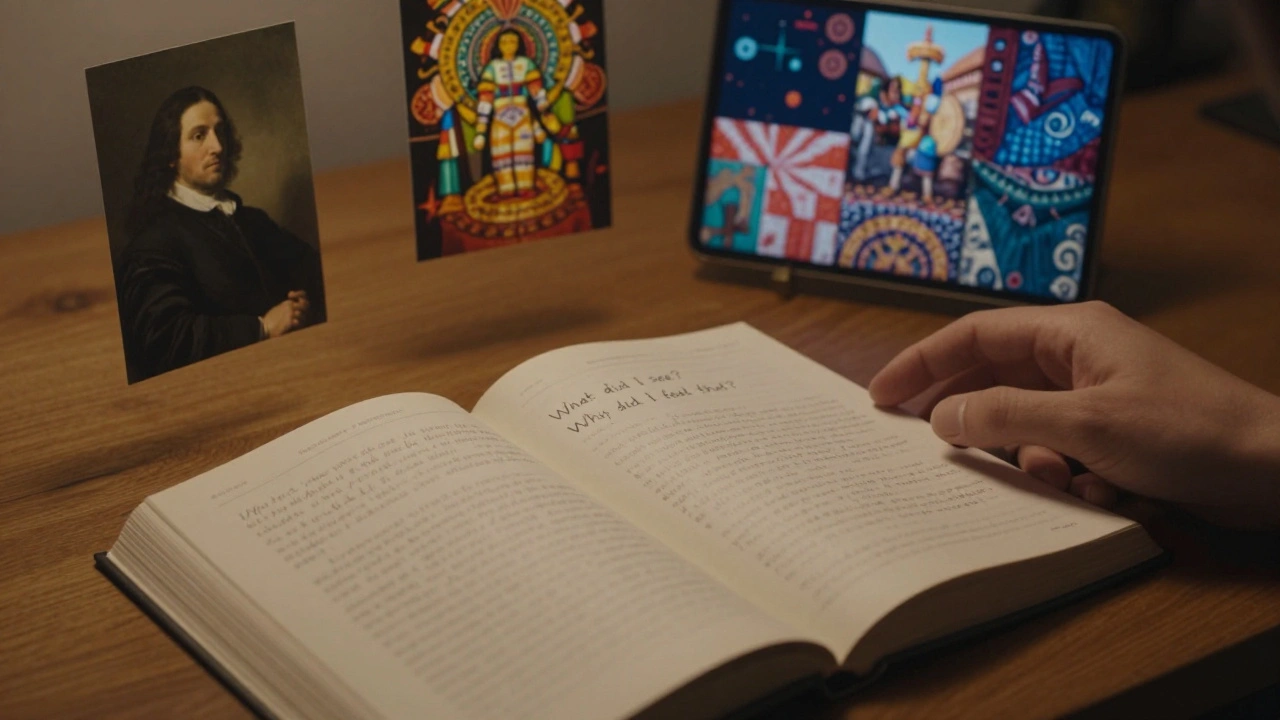
Real criticism doesn’t need fancy terms. It needs clarity. Ask: What did you see? What did it make you feel? Why? Did the composition lead your eye? Did the color choices create tension or calm? Was there a moment where the piece surprised you?
Art doesn’t need to be decoded like a secret code. It needs to be described, observed, and reflected on. If you can’t explain what’s happening in plain language, you probably haven’t looked closely enough.
Ignoring Context-History, Culture, and Intent
One of the biggest mistakes is treating art as if it floats in a vacuum. A 19th-century portrait of a noblewoman isn’t just about brushwork. It’s about class, gender, power, and the economic systems that paid for it. A protest mural in Mexico City isn’t just colorful-it’s a direct response to political violence, indigenous erasure, and state control.
When critics ignore context, they reduce art to decoration. They miss the point entirely. A sculpture that looks "ugly" to a Western viewer might be a sacred object in its culture. A performance piece that seems "pointless" might be a direct critique of consumerism in a country where advertising is everywhere.
Good criticism asks: Who made this? When? Where? Why? What was happening in the world then? What was the artist trying to say, and how did they choose to say it? Without those answers, you’re not criticizing-you’re guessing.
Equating Shock With Significance
Art that makes people uncomfortable doesn’t automatically mean it’s important. A bloody carcass in a gallery, a naked person chained to a wall, a video of someone screaming for ten minutes-these can be powerful. But they can also just be cheap stunts.
Shock has its place. It can break through numbness. But if the shock is the whole point, and there’s no deeper layer, then it’s not criticism-it’s a prank. Think of the difference between Marina Abramović’s endurance performances and a viral TikTok trend that just wants likes.
Ask: Does the discomfort lead to reflection? Does it change how you see something else? Or does it just make you say, "Wow, that’s wild," and move on?
Real impact lingers. It doesn’t fade after the first gasp.
Only Valuing What’s New or "Cutting-Edge"
There’s a bias in contemporary art circles that anything old is irrelevant. That anything traditional is "out of touch." But that’s not progress. It’s ignorance.
Rembrandt’s lighting still teaches painters how to convey emotion. Frida Kahlo’s self-portraits still redefine identity and pain. Even the most "avant-garde" artists borrow from history. The idea that art must always be new to be valuable is a myth built by markets, not meaning.
A painting from 1870 can speak more clearly to today’s political climate than a digital NFT made last month. The age of the work doesn’t matter. The depth of its inquiry does.
Don’t dismiss something just because it doesn’t look like what’s trending on Instagram. Some of the most vital art today is quietly reviving old techniques, reinterpreting forgotten traditions, or giving voice to histories that were erased.
Letting Market Value Dictate Artistic Value
Just because something sold for $50 million doesn’t mean it’s the greatest artwork ever made. Auction prices reflect wealth, demand, and speculation-not artistic merit.
Think about the most expensive painting ever sold: Leonardo da Vinci’s "Salvator Mundi." It sold for $450 million. But even experts debate whether it’s fully by da Vinci, and many art historians question its technical quality compared to his other works. Its price came from rarity, celebrity, and billionaire competition-not artistic truth.
Art markets are financial systems. Criticism is a human one. The two don’t have to align. In fact, they rarely do. The most important art of our time might be the murals painted by activists in abandoned buildings, the quilts made by elders in rural communities, or the digital collages shared on free platforms.
Money tells you what people are willing to pay. Criticism tells you what people are willing to feel.
Final Thought: Criticism Is a Conversation, Not a Verdict
Art criticism shouldn’t be about ranking, banning, or declaring winners and losers. It should be about opening doors. About asking better questions. About listening to what the work is trying to say-and being brave enough to admit when you don’t understand it yet.
The best critics aren’t the ones with the most degrees. They’re the ones who show up, look closely, stay curious, and admit when they’re wrong. They don’t need to like everything. But they refuse to stop trying to see.
Next time you stand in front of a piece of art, don’t ask: "Do I like this?" Ask: "What is this asking of me?" That’s where real criticism begins.
Can art criticism be objective?
Art criticism can’t be purely objective because art speaks to emotion, memory, and culture. But it can be well-reasoned. Good criticism uses clear evidence-formal elements like color, composition, texture-and ties them to context: history, intent, and social conditions. It doesn’t say "I like it" or "I hate it." It says, "This works because…" or "This falls short because…" That’s not objectivity-it’s accountability.
Is it okay to criticize art I don’t understand?
Yes-but only if you’re honest about not understanding it. Don’t pretend you do. Instead, ask: What am I missing? What’s the artist trying to communicate? What’s the cultural background? Sometimes the most valuable criticism starts with curiosity, not confidence. Many groundbreaking works were initially dismissed because people didn’t know how to read them. The goal isn’t to force understanding. It’s to stay open to it.
Do I need formal training to be a good art critic?
No. Many of the most influential critics had no art degrees. What matters is how deeply you look, how honestly you reflect, and how much you’re willing to learn. A museum guard who’s seen the same painting every day for 20 years might have more insight than a professor who’s never touched a brush. Training helps, but observation and empathy matter more.
How do I avoid being influenced by other critics?
Go in blind. Look at the artwork before reading any reviews. Write down your own thoughts-what you see, what you feel, what questions it raises. Then, if you want, read what others say. Compare. See where your reaction matches or diverges. That’s how you build your own voice. Don’t let someone else’s interpretation become your default.
What’s the difference between art criticism and art appreciation?
Appreciation is about enjoyment. Criticism is about understanding. You can appreciate a painting without analyzing it. But criticism demands more: it asks why you feel what you feel, how the artist achieved it, and whether it succeeds in its purpose. Appreciation says, "This is beautiful." Criticism says, "This is beautiful because of how the light falls on the figure, and that choice reflects 18th-century ideals of femininity." One celebrates. The other examines.